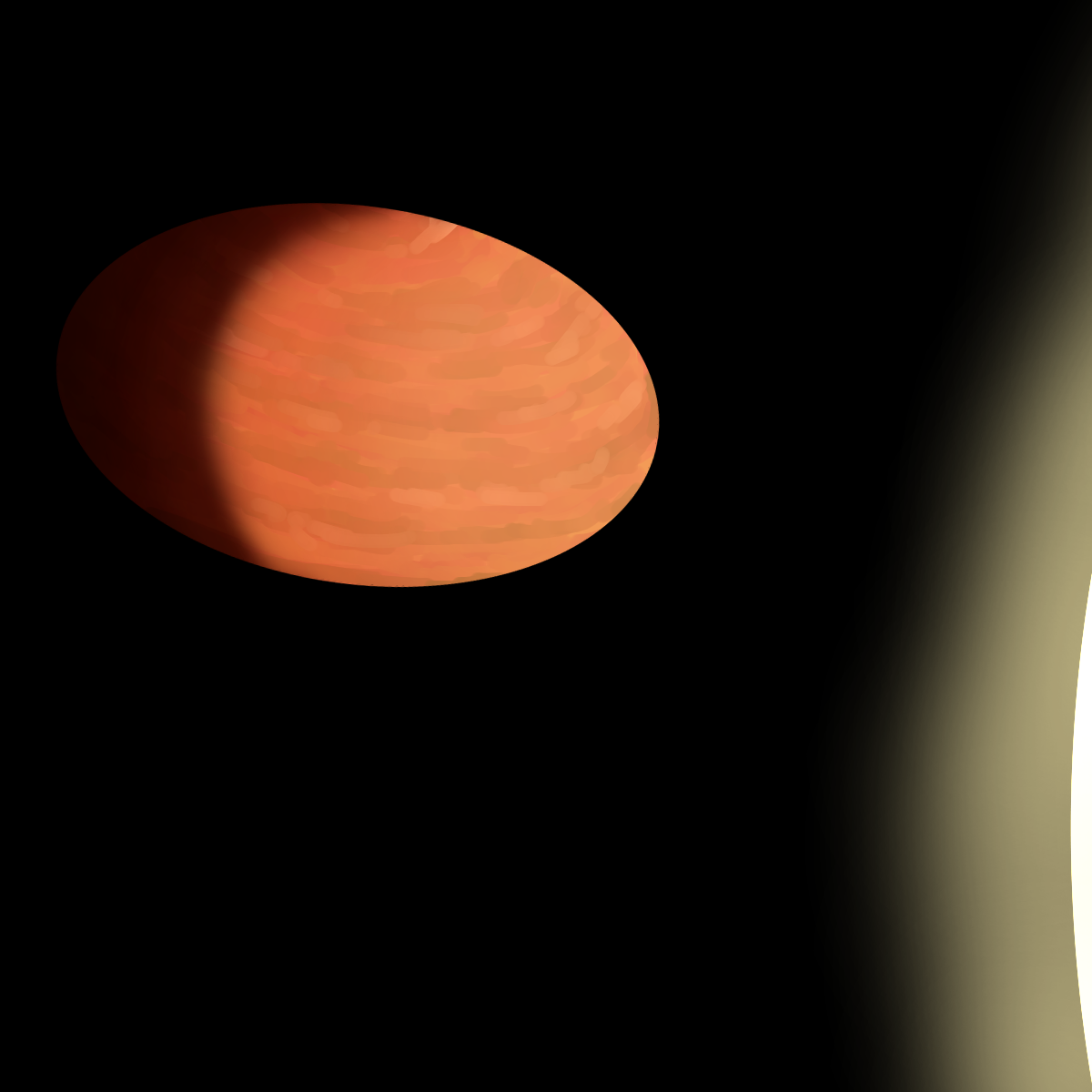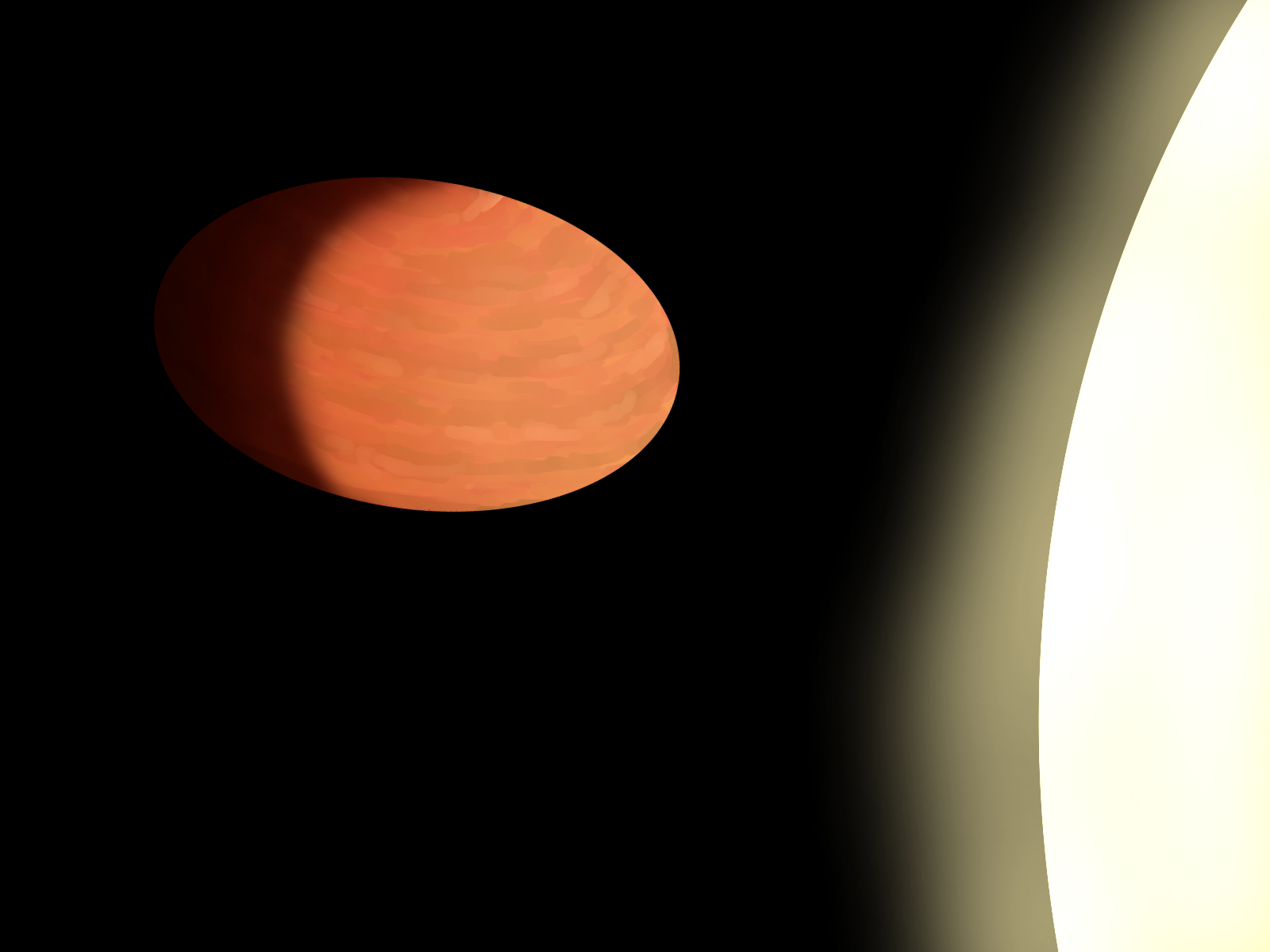
HD 104985 b

HD 104985 b

ファイル 編集 表示 挿入 フォーマット ツール テーブル 段落

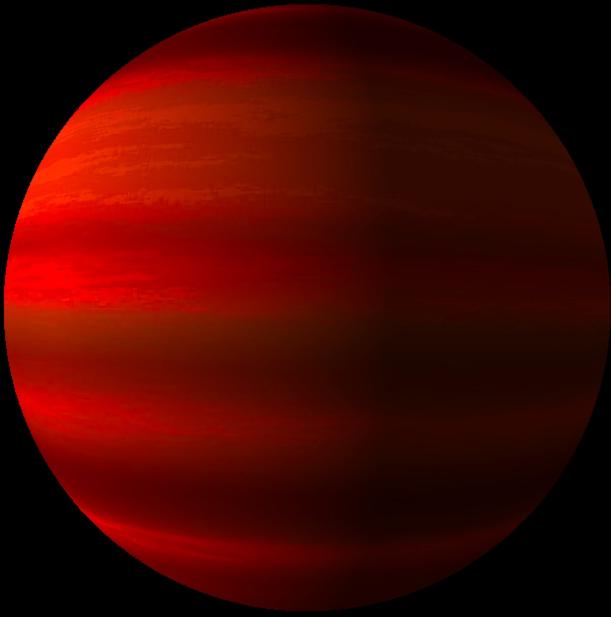
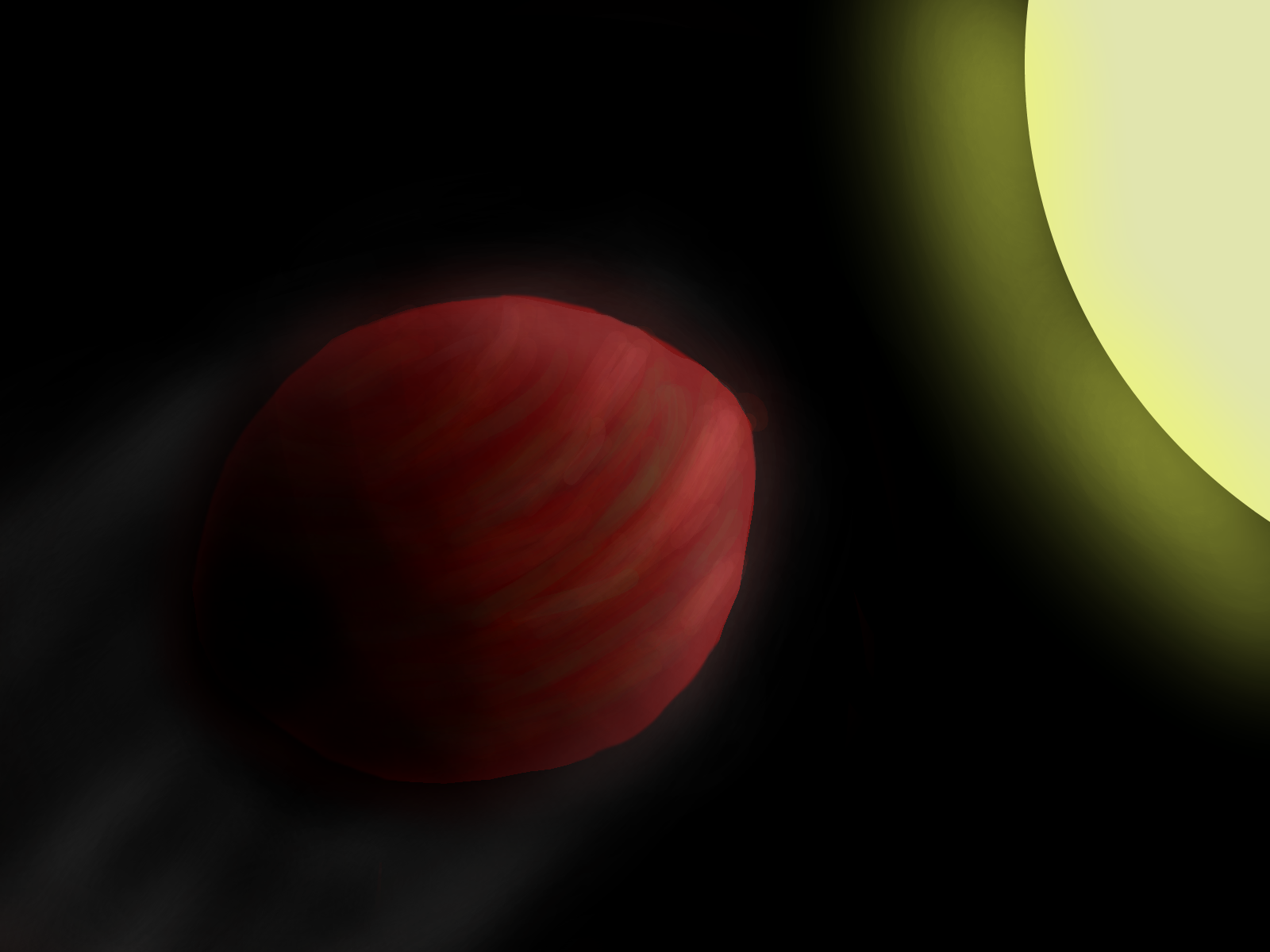
HD 104985 b is an exoplanet orbiting the star HD 104985, located 316.7 light-years (parsecs) from the Solar System, and was announced in 2003. The star HD 104985 has an apparent magnitude of 5.8 and an absolute magnitude of 0.9. This star has 1.6 times the mass of the Sun, a radius 10.9 times that of the Sun, a surface temperature of 4,786 K, and a spectral type of G9 III. In this star’s planetary system, HD 104985 b orbits the star with an orbital period of 199.5 days and a semi-major axis of 0.95 astronomical units (142,117,977.2 km).

[HD 104985 b Overview]

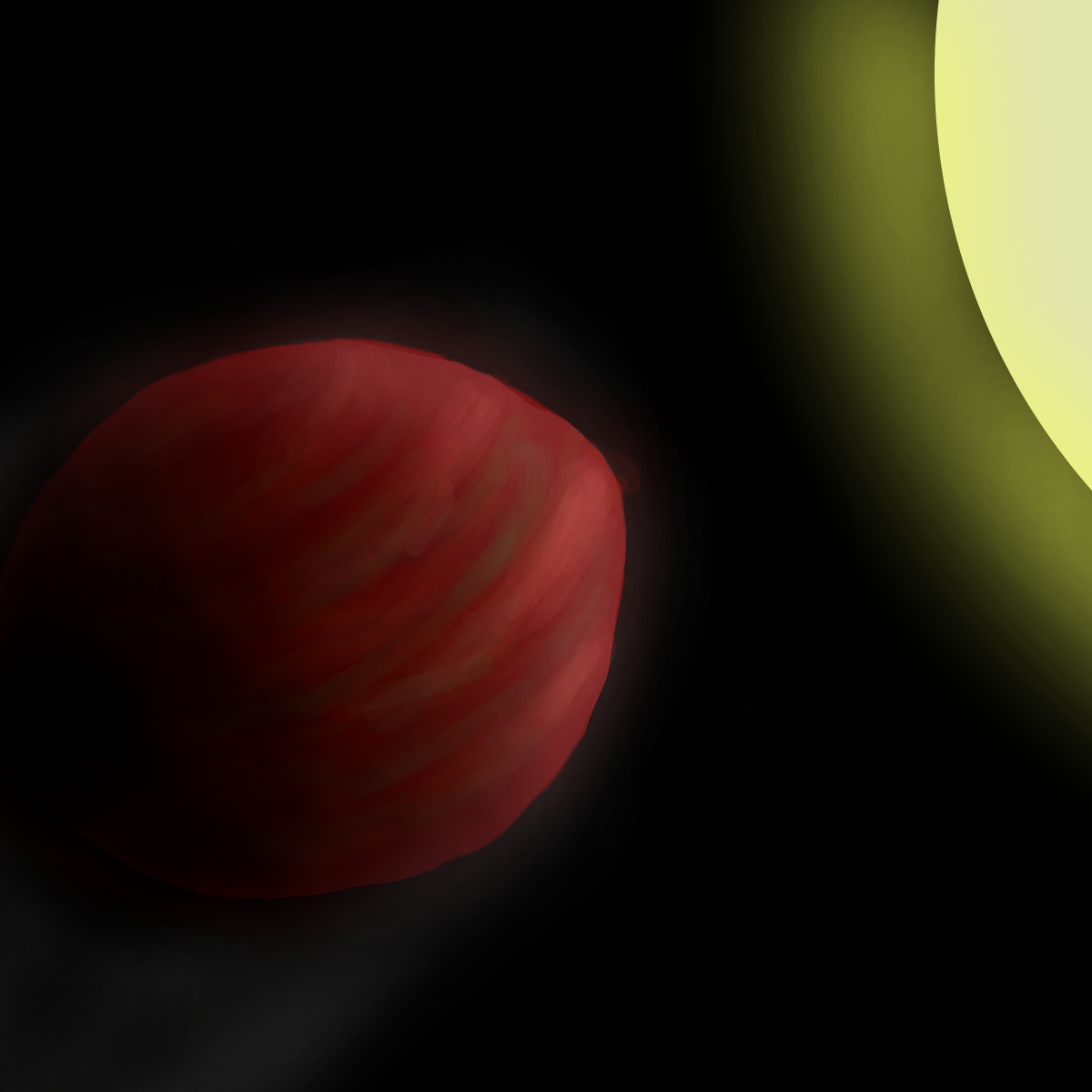
HD 104985 is a 6th-magnitude star (apparent magnitude) in the constellation Camelopardalis, located approximately 317 light-years from Earth. HD 104985 b is a planet with an orbit slightly less than one astronomical unit from this star. HD 104985 b has a radius nearly identical to Jupiter’s and a mass 8.3 times that of Jupiter. To draw an analogy with our solar system, HD 104985 b is a Jupiter-sized planet located between the orbits of Venus and Earth. Although it orbits at a distance roughly equivalent to Earth’s, the central star is extremely massive, so the environment is believed to be scorching hot.

[The First Exoplanet Detected in Japan: Demonstrating Japan’s Unique Contribution to the World]

HD 104985 b was detected using the radial velocity method with the 188-cm reflecting telescope owned by the Okayama Astrophysical Observatory and was announced in 2003 by Fumie Sato (then affiliated with the National Astronomical Observatory of Japan; now at Tokyo Institute of Technology) and his colleagues. This was the first detection of an exoplanet in Japan and attracted significant attention both domestically and internationally. Since the world’s first observation of an exoplanet in 1995, a fierce “planet-hunting race” had been underway worldwide, and Japan had now joined the fray.

While previous observations had targeted stars similar to the Sun, Sato and his team began searching for planets around giant stars—stars that have evolved and expanded significantly in size. In fact, HD 104985 has a radius 10.6 times that of the Sun and was one of the giant stars Sato and his team had identified as a candidate for observation. After two years of persistent observation, they successfully proved that exoplanets exist even around giant stars, demonstrating Japan’s unique contribution to exoplanet research.

[The Okayama Astrophysical Observatory’s 188-cm Reflecting Telescope: A Telescope That Supported Astronomical Observations in Japan for Half a Century]

The Okayama Astrophysical Observatory, one of the projects of the National Astronomical Observatory of Japan, began operations in Asakuchi City, Okayama Prefecture, in 1962. Until 2018, when operations as a project came to an end, it served as an outstanding optical and infrared astronomical observatory for approximately 56 years, utilized by many researchers. The observatory’s largest telescope is the 188-cm reflector, which has contributed to numerous significant discoveries. Its contributions to the discovery of exoplanets have been particularly notable; including joint observations with other telescopes, it has contributed to the discovery of 58 new exoplanets to date.

(For details on the 188cm telescope’s overview and achievements, please refer to this page.)
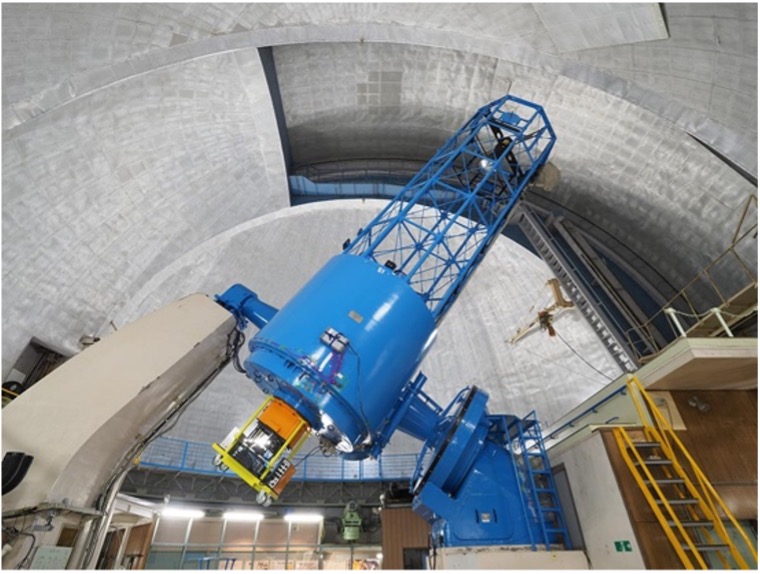
188-cm reflector telescope(https://www.nao.ac.jp/research/telescope/188cm.html

After the project concluded, the telescopes at the Okayama Astrophysical Observatory were transferred to researchers from the participating universities to serve as their dedicated instruments. Currently, the 188-cm reflecting telescope is out of service due to a dome malfunction. Let’s look forward to the day when restoration work is complete and we can once again see the 188-cm reflecting telescope back in action.

[Kyoto University Okayama Astronomical Observatory’s Seimei Telescope: One of the Largest Telescopes in East Asia]

Following in the footsteps of the 188-cm telescope, a new telescope began operations in Okayama in 2019. This is the Seimei Telescope, owned by Kyoto University. With a primary mirror consisting of an 18-element composite mirror with a diameter of 3.8 meters, it is the largest telescope in East Asia. (There are differing opinions as to whether it is the “largest” or “one of the largest.” Please refer here for details.)
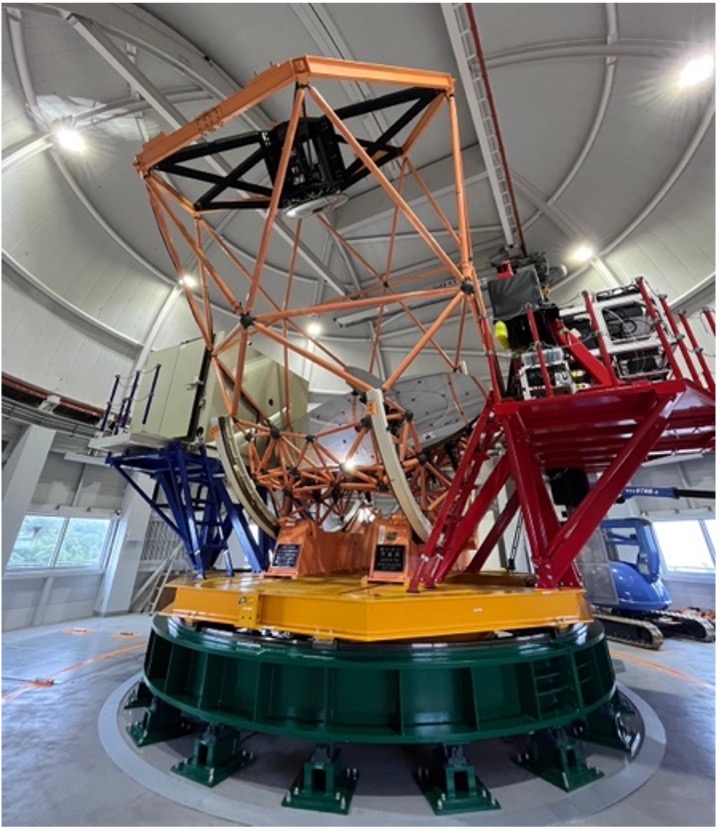
Seimei Telescope (Photo by the author)

The name “Seimei Telescope” is derived from Abe no Seimei, a Onmyōji (master of divination) from the Heian period. Abe no Seimei, who conducted astronomical observations throughout the country, is said to have established a residence for astronomical observation near the summit of Mt. Abe, located northwest of the current Okayama Astronomical Observatory. The telescope was named “Seimei Telescope” in honor of Abe no Seimei, a pioneer in astronomical research with ties to Okayama.

The Seimei Telescope is also used for the search for and observation of exoplanets, and a new high-dispersion spectrograph called GAOES-RV will begin operations in the second half of fiscal year 2023. A high-dispersion spectrograph is a device that separates the light collected by the telescope into its component wavelengths for detection; it is indispensable for observing exoplanets using the radial velocity method. With improved performance compared to previous high-dispersion spectrographs, GAOES-RV is expected to enable the observation of exoplanets around fainter stars.

(For more information on GAOES-RV, please click here.)

From Japan’s first detection of an exoplanet to the latest observational equipment, we’ve traced the history of exoplanet exploration. While the allure of exoplanets is endless, the telescopes and instruments used to discover them hold a unique charm of their own. If this has piqued your interest even a little, why not turn your attention not only to the star-studded night sky but also to the “big eyes” set up on the ground?

(文責:渡邊新)

Click here for detailed information on HD 104985 b
http://www.exoplanetkyoto.org/exohtml/HD_104985_bJP.html

Proxima Centauri d

Proxima Centauri d is an exoplanet orbiting the star Proxima Centauri, located 4.2 light-years from our solar system.
The host star Proxima Centauri has an apparent magnitude of 11.1 and an absolute magnitude of 15.6.
It is a spectral type M5.5V star with about 0.1 times the mass of our sun and 0.1 times the radius, and the surface temperature is thought to reach 3050 degrees.
The exoplanet Proxima Centauri d orbits in about 5.2 days with an orbital radius of 0.03 astronomical units (4315898.6 km).

Proxima Centauri is about 4.2 light years away from the Earth and is considered the closest star to the Sun. The exoplanet that orbits it, Proxima Centauri d has a short orbital period of around 5.17 days. Proxima Centauri d orbits close to its host star. Hence, its blackbody temperature (assuming an albedo of 0.3) is calculated to be about 297 K. This is a temperature at which liquid water can exist. It is due to the low temperature of the host star, which is an M-type star. This means the exoplanet is located within the habitable zone.

The European Southern Observatory officially reported the discovery of Proxima Centauri d in February 2022. Previously, two other planets were confirmed to orbit Proxima Centauri, but although the star system has attracted attention, the discovery of this planet had not yet been reported. The radial velocity method was used to observe the planet (also called Doppler spectroscopy), which obtains information about the planet by observing the slight flicker of the host star during the planet’s orbit, which is affected by the planet’s mass. However, Proxima Centauri d’s mass is only about a quarter of the Earth, so its effect on the star is small. According to the observatory, the radial velocity of Proxima Centauri d was only about 40 cm per second. This observation required extreme precision, and took two years from the first detection of the planet’s existence to the time its discovery was reported.
The discovery of such a small planet is important because it could lead to the discovery of many more minor habitable planets that have not been discovered yet.

HD 40307 g

HD 40307 g was discovered using the radial velocity method, based on data observed by HARPS in 2012. The planet’s host star, HD 40307, is classified as a K type main-sequence star. The K-type star is slightly smaller than our Sun’s G-type star and is actually only 0.77 times the size of the Sun. Unfortunately, the star’s apparent magnitude is only 4.17, so it is not visible from Earth, but it is located 42 light-years away in the Pictor constellation. Six planets have been discovered orbiting HD 40307.

HD 40307 g, is the outermost of the six planets found orbiting the star. The planet orbits about 0.6 the distance between the Sun and Earth in about 197 days.
It is assumed to be about 7.1 times the mass of the Earth, which makes it a rocky planet. The radial velocity method measures the changes in the wavelength of light of a star to detect a planet. This is based on the Doppler Effect; the wavelength of light is shorter when the star is moving toward us and longer when the star is moving away. This means we can only detect the earthward motion, and the measured value versus the true value will be different depending on the observable angle. Therefore, only the lower limit is known.

この惑星の最大の特徴は、ハビタブルゾーンつまり水が液体で存在できる範囲にいることです。さらに、この星は大きさの分類上スーパーアースに分類されますが、初めて発見されたハビタブルゾーンにいるスーパーアース型の太陽系外惑星になります。くわえて、潮汐ロックがかかっている可能性が比較的低くなっています。潮汐ロックとは公転周期と自転周期が完全に一致して、主星に向けられる面がいつも同じになることです。比較的多くのハビタブル惑星が多く見つかっているより軽い恒星系では主星の温度が低いため主星と惑星の距離が近くなり潮汐ロックがかかっている可能性が高くなってしまいます。潮汐ロックがかかってしまうと主星に向いている面の気温が高くなり、逆に逆面では気温が低くなり生物が生きていくのにあまり適さない環境になってしまいます。HD 40307gは比較的その恐れが少なく生物が存在する希望がより高くなります。
(大山 航)

Kepler-1649cについてのより詳しいデータは以下のデータベースページをご参考に。

http://www.exoplanetkyoto.org/exohtml/HD_40307_gJP.html

• M. Mayor, S. Udry, C. Lovis, F. Pepe, D. Queloz, W. Benz, J.-L. Bertaux, F. Bouchy, C. Mordasini, D. Segransan (2009). “The HARPS search for southern extra-solar planets. XIII. A planetary system with 3 Super-Earths (4.2,6.9&9.2Earth masses)”. Astronomy and Astrophysics 493 (2): 639-644
• Tuomi, Anglada-Escude, Gerlach, Jones, Reiners, Rivera, Vogt, Butler, Mikko, Guillem, Enrico, Hugh R. R., Ansgar, Eugenio J., Steven S., R. Paul (2012年). “Habitable-zone super-Earth candidate in a six-planet system around the K2.5V star HD 40307”

AU Mic b

AU Microscopii (hereinafter referred to as AU Mic) is a star located in the southern constellation Microscopium about 32.3 light-years (9.79 Parsecs) away from our solar system. AU Mic is a young red dwarf star that is classified as an M1 Ve. Its apparent magnitude is 8.7 and its temperature is 3730 K. It is a small star, at only 60% the radius of our sun, and it radiates only 9% of our sun’s light.

The most interesting thing about AU Mic is the debris disk found around it, which is circumstellar disk of dust that orbits the star. This disk was found and then confirmed in 2003 by Paul Kalas and collaborators using the University of Hawaii 2.2-m telescope on Mauna Kea, Hawaii. The disk was detected from about 35 to 210 astronomical units from the star, a region where dust lifetimes exceed the present stellar age. The total amount of dust that makes up the disk is thought to be at least 6 lunar masses.

Within the debris disk, a planet was recently discovered. AU Mic b orbits its host star in about 8.46 days at a distance of 0.07 astronomical units. It has a radius 0.4 of Jupiter and a mass of about 0.18 of Jupiter. The fact that a planet exists within the debris disk offers scientists a chance to study planet formation and evolution.

(Ling Cassandra)

Imaginary Picture of AU Mic b (Ryusuke Kuroki, Yosuke A. Yamashiki)
Size of AU Mic & AU Mic b in comparison with our Solar System
Habitable zone calculated based on Kopparapu et al.(2013) around the star AU Mic

For more information on AU Mic, please visit the ExoKyoto database:

http://www.exoplanetkyoto.org/exohtml/AU_Mic_b.html

Imaginary Picture of AU Mic b by Miu Shimizu

Kepler-1649 c

Kepler-1649 c is an Earth-sized exoplanet discovered by re-analyzing data from the Kepler space telescope. Its size is around 1.06 times the radius of the earth, and the mass is 1.21 times the mass, estimated by ExoKyoto. The host star, Kepler-1649, is an M5V type red-dwarf with a surface temperature of 3240K. Its radius is estimated to be about 25% of the sun and its mass is about 21.9%. The exoplanet orbits the red dwarf, at around 0.0855 astronomical units (1,280,000 km) which takes about 19.5 days. The estimated black body temperature of Kepler-1649 c is 245.39K assuming an albedo of 0.3, which is almost the same as the earth (255K). If the atmospheric pressure and components are similar to the earth, it is very probable that its environment also resembles the Earth

However, the exoplanet is most likely tidally locked, due to it revolving around a red dwarf star. Also, the light seen from the surface of the planet would be significantly different from sunlight on Earth, composed of about 90% infrared rays and only 8.87% visible light component (according to Exo Kyoto).

Ultraviolet radiation, including extreme ultraviolet radiation, is estimated to be about 0.17%, which requires more detailed observation.

Kepler-1649 c’s orbit and habitable zone according to Kopparapu et al.2013.
Size comparison according to ExoKyoto

Kepler-1649’s estimated spectra using the ExoKyoto spectrum module

For more detailed information on Kepler-1649 please visit to the following database page

http://www.exoplanetkyoto.org/exohtml/Kepler-1649_c.html

WASP-76b

WASP-76b is an exoplanet that revolves around the star WASP-76 about 640 light years away in the Pisces constellation.

The star WASP-76 has an apparent magnitude of 9.5, an absolute magnitude of 4.1, and is a spectral F7 type star with a surface temperature of 6250K.

The star has a mass about 1.5 times that of the sun and a radius about 1.7 times that of the sun.

WASP-76b is the only planet orbiting WASP-76 and it is classified as a hot jupiter.

The exoplanet was discovered by the transit method in 2013.

Its mass is about 0.92 times that of Jupiter, but the powerful radiation from the main star expands the atmosphere and the radius is about 1.83 times that of Jupiter, making it a low-density planet.

The largest radius of its orbit is about 0.033 AU (5 million km) and its orbit lasts around 1.8 days.

Its temperature is 2700K on the day-side and 1800K on the night-side; it is tidally locked. 

In 2020, observations at the Paranal Observatory with the Very Large Telescope (VLT) revealed that the day-side atmosphere was rich in iron vapor.

A strong wind blows on the surface because the temperature difference between the day-side and the night-side is close to 1000K. The wind and the rotation carry iron vapor from the day-side to the night-side, which causes cooling. It is thought that this causes condensation, which becomes rain. 

(References)