
K2-3d

K2-3d

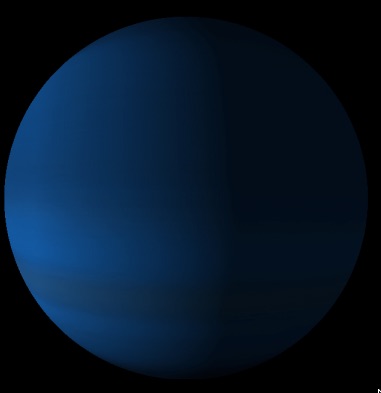
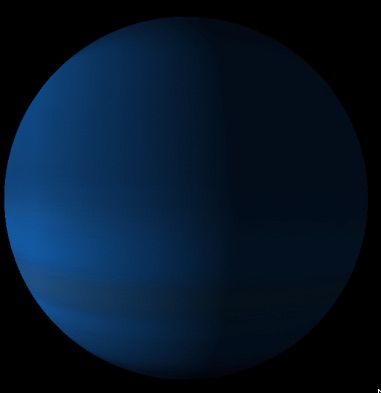
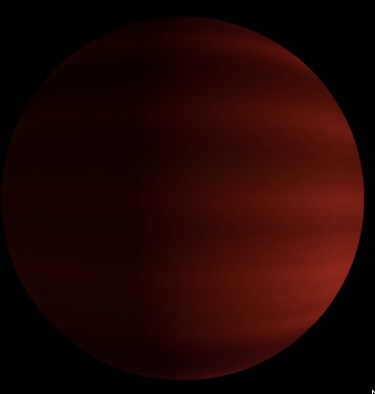
(Imaginary Image of K2-3d Fuka Takagi, Hina Bando & Yosuke A. Yamashiki)

K2-3 (also called EPIC 201367065) is an M-type star with a surface temperature of 3951 K, and a mass and radius about 0.6 times that of our sun. It is located about 147 light years from the Earth. The K2 mission (the second mission by the Kepler Space Telescope) observed the star for any transiting planets present. The mission reported the existence of three planets in 2015, and additional observations have been made, as well as published papers in an attempt to determine the planetary parameters with MUSCAT and other instruments using the Okayama 188cm telescope.

The two closest planets that were discovered, K2-3b and K2-3c have radii of 2.1 and 1.7 times that of the Earth, respectively, and orbital periods of 10.1 and 24.6 days around the host star. They are classified as super-Earths, which are defined as planets with masses and radii several times that of the Earth.

The third planet discovered, K2-3d, has an orbital period of 44.6 days with a radius 1.51 times that of Earth. It is located at 0.21 AU, which is much closer to its host star than the distance between our sun and Earth (1 AU). However, because the star is much cooler than our own sun, K2-3d is classified as being near the inner boundary of the habitable zone.

The researchers of the paper believe that K2-3d could be located at the boundary between where rocky planets similar to Earth exist and slightly larger planets rich in volatile elements, so it is a possibility that liquid water could be present on the surface.

(Yuta Notsu)

Journal Articles:

1.) Spitzer Observations of Exoplanets Discovered with The Kepler K2 Mission

2.) GROUND-BASED TRANSIT OBSERVATION OF THE HABITABLE-ZONE SUPER-EARTH K2-3D


WEB Articles:

1.) Potentially habitable super-Earth K2-3d observed transiting parent star

2.) Timing the Shadow of a Potentially Habitable Extrasolar Planet Paves the Way to Search for Alien Life

3.) K2-3d: Ground-Based Telescope Observes Super-Earth Transiting Bright Star

K2-9b

During the K2 Kepler Mission, 31 stars were discovered that potentially had 36 orbiting planets. After extensive observations using automatic transit analysis, 21 exoplanets, including 17 new discoveries, were confirmed to be real planets, including K2-9b. K2-9b is a M2.5 ± 0.5, 110 ± 12 pc dwarf star with a radius of 2.25 (+0.53-0.96) R⊕ and an orbital period of 18.4498 days. The temperature of K2-9b is estimated to be less than 500 K, which means that the exoplanet receives about the same amount of solar radiation as the Earth. However, according to readings from the ultraviolet space telescope GALEX, UV radiation from its host star is strong enough to affect the planet’s atmosphere and it is improbable that the environment would be hospitable to life. There is still a lot to learn about this exoplanet, especially because it has a low temperature and is around the size of Earth or Neptune.

(Nami Kimura)
References:
Two Small Temperate Planets Transiting Nearby M Dwarfs in K2 Campaigns 0 and 1
Schlieder, Joshua E et al.
Publication:
The Astrophysical Journal, Volume 818, Issue 1, article id. 87, 15 pp. (2016).
Pub Date: February 2016

Kepler-155 c

Kepler-155 c is located 985.0 light-years (302 parsecs) from our solar system and was discovered in 2014 orbiting its host star Kepler-155. The apparent magnitude of the host star is 12.5 and the absolute magnitude is 5.1. Kepler-155 is about 0.6 the mass of our sun and has about 0.6 the radius. Its surface temperature is 4508 K and is a spectral K4 type star. The planet Kepler-155 c orbits the star every 52.7 days, it’s orbital radius is 0.024 SEAU.

Kepler-235 e

Kepler-235 e is located 1712.3 light-years (525 parsecs) from our solar system and was discovered in 2014 orbiting its host star Kepler-235. The apparent magnitude of the host star is 14.0 and the absolute magnitude is 5.4. Kepler-235 is about 0.6 the mass of our sun and has about 0.6 the radius. Its surface temperature is 4255 K and is a spectral K6 type star. The planet Kepler-235 e orbits the star every 46.2 days, it’s orbital radius is 0.21 SEAU.

GJ 625 b

The planet GJ 625 b, orbits around an M dwarf star called GJ 625 located about 21.2 light-years from Earth. It is thought to be at least 2.8 times the mass of Earth and orbits its host star in about 14.6 days. The findings,  led by the Canary Islands Institute of Astrophysics, will be published in the Journal of Astronomy and Astrophysics.

GJ 625 b is located on the inner edge of the habitable zone, where temperatures are just right for liquid water to exist. It orbits at a distance of about 0.08 AU (astronomical units, 1 AU is the distance from Earth to the Sun).

“GJ 625 b is a small super-Earth in the habitable zone of a nearby M-dwarf,” lead author Alejandro Suarez Mascareño, from the Canary Islands Institute of Astrophysics, told IFLScience. “Even after the last round of discoveries of small exoplanets around M-dwarfs, the number of rocky planets known around this kind of star is relatively small.”

Journal Articles:

1.) HADES RV Programme with HARPS-N at TNG V. A super-Earth on the inner edge of the habitable zone of the nearby M-dwarf GJ 625

2.) Equilibrium Temperatures and Albedos of Habitable Earth-Like Planets in a Coupled Atmosphere-Ocean GCM

WEB Articles:

1.) Super-Earth Discovered Around Nearby Red Dwarf Star

2.) A new Super-Earth discovered near the habitable zone of a cool star.

CoRoT 10 b

(Imaginary Image of Corot 10b Ryusuke Kuroki, Fuka Takagi, and Yosuke A. Yamashiki)

COROT-10b is an enormous exoplanet discovered in 2007 (reported in 2010) by the CoRoT satellite (this satellite preceded the Kepler Space Telescope in searching for planets using the transit method) after 142 days of observation. The planet has a radius of about 0.97 that of Jupiter and orbits its host star, COROT-10, in about 13.4 days. COROT-10 is a K1-type star with a surface temperature of 5075 K. It is slightly smaller in mass and radius (0.89 times the mass and 0.79 times the radius) than the Sun.

The orbital eccentricity of this planet is very large at 0.53 ± 0.04, and its orbit is elliptical, not a perfect circle. It of great interest to understand how such a large planet with such a large orbital eccentricity could exist within our knowledge of the planetary formation process.

(Yuta Notsu)

Journal Articles:

1.) Transiting exoplanets from the CoRoT space mission X. CoRoT-10b: a giant planet in a 13.24 day eccentric orbit

WEB Articles:

1.) CoRoT-10 b

2.) Planet CoRoT-10 b