TOI-174系
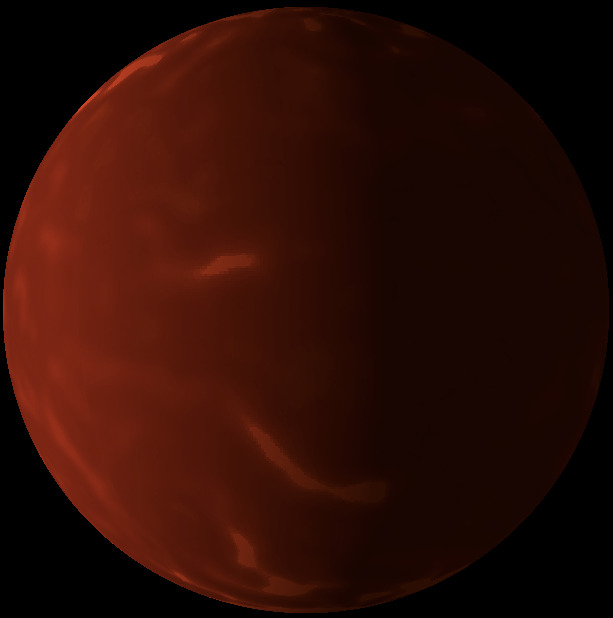
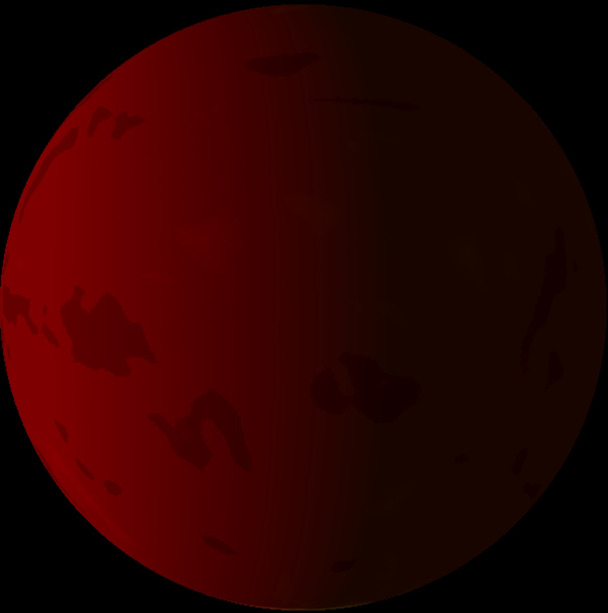
Imaginary Illustration of TOI-174 b
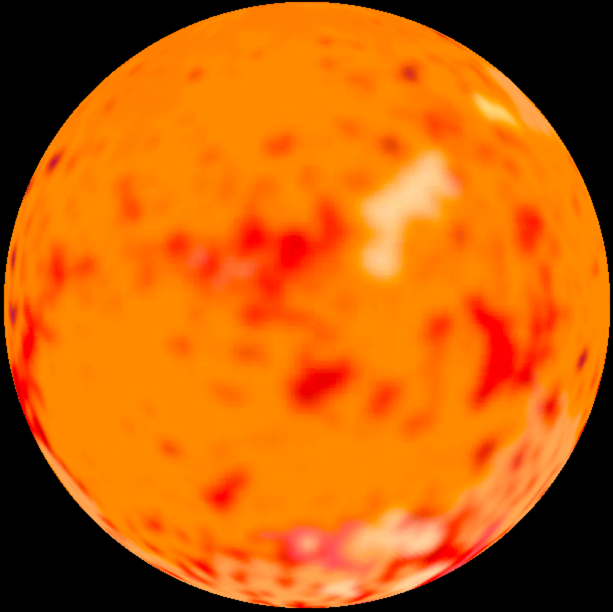
Imaginary Illustration of TOI-174
TOI-174 is a star located 127 light-years from Earth. This star, TOI-174, has five exoplanets, which are likely to be super-Earths and super-Mercuries.
The Transiting Exoplanet Survey Satellite (TESS) (a space telescope launched as part of NASA’s Explorer Program. Its mission is to search for exoplanets by observing an area 400 times larger than that of the Kepler Space Telescope using the transit method. (Launched in 2018) Observations using the transit method by TESS have indicated the possible existence of two exoplanet candidates, “TOI-174.01” and “TOI-174.02.”
Subsequently, in 2019, follow-up observations using Doppler spectroscopy were conducted with the High Accuracy Radial velocity Planet Searcher (HARPS) (an exoplanet observation instrument operated by the European Southern Observatory (ESO) since 2003), the existence of two planet candidates, TOI-174.01 and TOI-174.02, was confirmed through follow-up observations using Doppler spectroscopy, and they were named “TOI-174 b” and “TOI-174 c,” respectively.
Their orbital periods are approximately 17.7 days and 29.8 days, respectively, and the transit depths of these planets are 663 ± 48 ppm and 627 ± 61 ppm, respectively.
Following the confirmation of these planets, it was suggested in 2019 that “TOI-174.03,” “TOI-174.04,” and “TOI-174.05” might exist.
On September 27, 2022, follow-up observations using Doppler spectroscopy with ESPRESSO (the Echelle spectrograph mounted on the European Southern Observatory’s VLT) confirmed the existence of these three planets: “TOI-174.03,” “TOI-174.04,” and “TOI-174.05.” Starting with the planet having the shortest orbital period, TOI-174.04 was named “TOI-174 d,” TOI-174.05 was named “TOI-174 e,” and TOI-174.03 was named “TOI-174 f.”
Furthermore, research has indicated that b, c, and f are “super-Earths”—Earth-like planets with masses ranging from several to about ten times that of Earth. Additionally, it has been shown that d and e likely have compositions similar to Mercury in our solar system and are “super-Mercuries” with masses greater than that of Mercury.
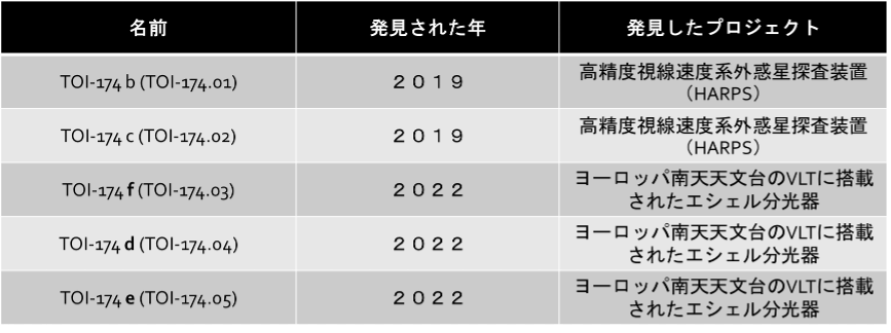 Year of Discovery of the TOI-174 Series and Summary of the Project
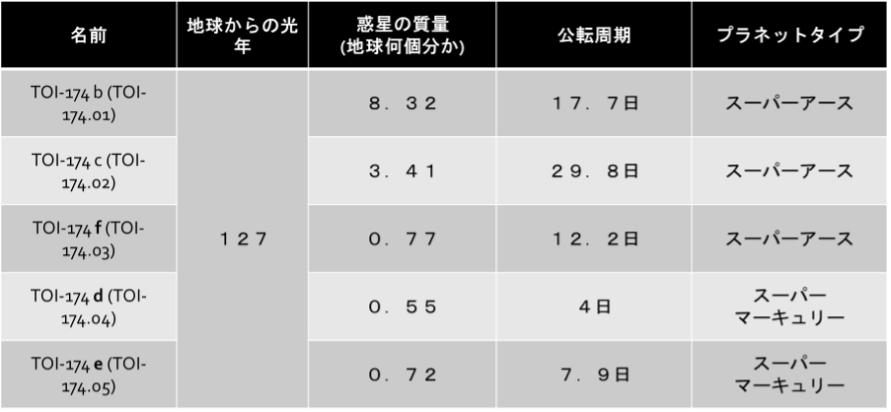 Basic Information on the TOI-174 Series
References:
NASA, EXOPLANET CATALOG HD 23472b from https://exoplanets.nasa.gov/exoplanet-catalog/7338/hd-23472-b/
IAC, Astronomers discover a planetary system with three super-Earths and two super-Mercuries, from https://www.iac.es/en/outreach/news/astronomers-discover-planetary-system-three-super-earths-and-two-super-mercuries
Ia, Two rare super-mercuries discovered around the same star from https://divulgacao.iastro.pt/en/2022/09/27/hd23472-eng/
Weblio, TOI-174, from https://www.weblio.jp/wkpja/content/TOI-174_TOI-174%E3%81%AE%E6%A6%82%E8%A6%81
(文責:新原)
For detailed information on the TOI-174 system, click here (You can also access the detailed pages for each planet from the star’s detailed page.)