LP 791-18 d
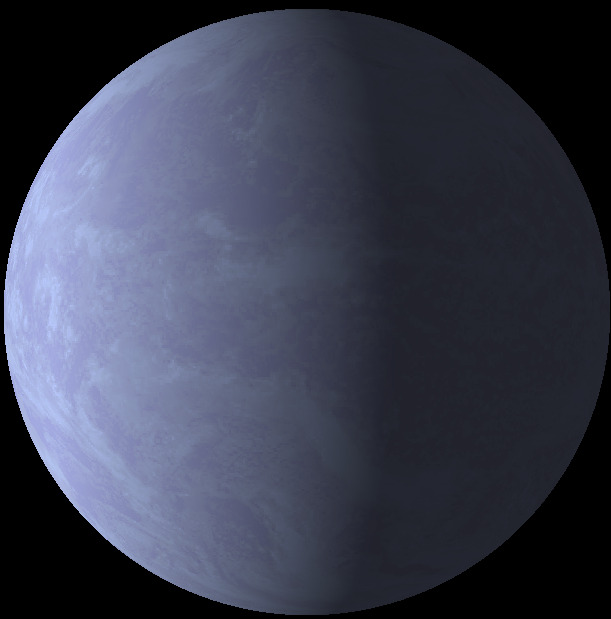
LP 791-18 d is an exoplanet orbiting the star LP 791-18, located 86.4 light-years (parsecs) from the Solar System, and was announced in 2023. The star LP 791-18 has an apparent magnitude of 16.9 and an absolute magnitude of 14.8. This star has 0.1 times the mass of the Sun, 0.2 times the Sun’s radius, a surface temperature of 2,960 K, and a spectral type of M6V.
A planet roughly the same size as Earth. And there’s even a possibility of volcanic activity and an atmosphere!?
The Earth-sized exoplanet LP 791-18 d is a planet orbiting the red dwarf star LP 791-18, located approximately 90 light-years from the Solar System in the direction of the constellation Copernicus. Planets b and c have previously been discovered in this star system. The newly discovered planet d is located in an orbit between planets b and c, orbiting the star with an orbital period of 2.75 days. Its radius is estimated to be approximately 1.03 times that of Earth, making it very similar in size. Additionally, Planet d’s mass is comparable to that of Earth. Planet b has a radius about 1.2 times that of Earth and an orbital period of approximately 0.94 days, while Planet c has a radius about 2.5 times that of Earth, a mass about nine times that of Earth, and an orbital period of approximately 4.99 days.
Planet d is located near the inner boundary of the habitable zone and is attracting attention as a planet of interest for research into the origins of life, as it has the potential to retain an atmosphere. The planet’s orbit is slightly elliptical due to gravitational pull from the large, massive Planet c, which orbits in the adjacent outer orbit. As it orbits along this elliptical path, Planet D is subjected to tidal forces from the star, causing it to deform slightly. This deformation may generate internal friction within the planet, heating it and triggering active volcanic activity on its surface—a mechanism similar to that which heats Io, Jupiter’s moon, which exhibits the most active volcanic activity in the solar system. Future observations of the planet’s atmosphere may yield important discoveries regarding how crustal activity affects the planetary atmosphere.
Like Earth’s Moon, Planet d has a synchronous rotation period due to tidal forces, meaning it always keeps the same face toward the star LP 791-18. Consequently, the day side is extremely hot, reaching 300–400 K, and it is highly likely that water has evaporated there. On the other hand, since the night side is thought to be sufficiently cool, if volcanic activity is occurring, Planet D may have an atmosphere, and water vapor could condense in the atmosphere on the night side, potentially resulting in the presence of liquid water.
Furthermore, Planet D’s active volcanic activity may play a role in releasing substances into the atmosphere that would otherwise be trapped within the planet’s crust. These substances include carbon, which is essential for life. If we can successfully detect the composition of this planet’s atmosphere, it will be possible to conduct a detailed investigation into the effects of the planet’s crustal activity on its atmosphere. This could lead to research on the origins of life and is significant from the perspective of astrobiology.
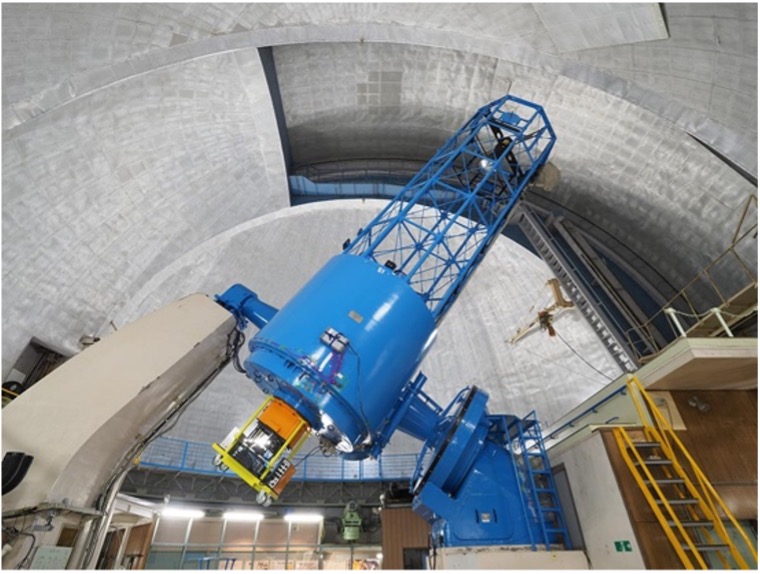
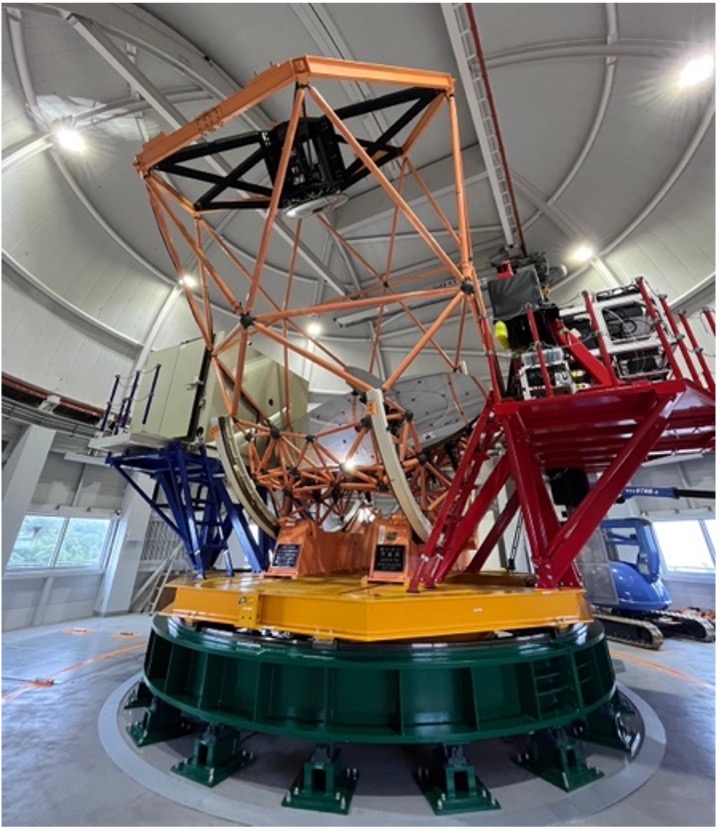
The findings of this study were published in the British scientific journal *Nature* on May 17, 2023 (BST). An international research team, including Professor Noriyasu Narita (Visiting Professor at the Center for Astrobiology, National Institutes of Natural Sciences) from the Graduate School of Arts and Sciences at the University of Tokyo, Specially Appointed Assistant Professor Akihiko Fukui, and Specially Appointed Researcher Mayuko Mori, utilized NASA’s Transiting Exoplanet Survey Satellite (TESS), NASA’s Spitzer Space Telescope, and numerous ground-based telescopes—including the multi-color simultaneous imaging cameras MuSCAT and MuSCAT2, developed by researchers at the University of Tokyo and the Center for Astrobiology.
〈References〉Article Information
・東京大学 大学院総合文化研究科・教養学部:火山活動の可能性がある地球サイズの惑星を発見 ー 潮汐力により加熱された系外惑星 LP 791-18d
・Spitzer Space Telescope:NASA’s Spitzer, TESS Find Potentially Volcano-Covered Earth-Size World
・IAC:Astronomers find Earth-sized world potentially covered in volcanoes
・Nature:A temperate Earth-sized planet with tidal heating transiting an M6 star 論文: 2023年5月17日
(文責:日置)
Click here for detailed information on LP 791-18 d