Category: Famous Exoplanets

Proxima Centauri c

Proxima Centauri c is a super-Earth-sized exoplanet discovered in 2019 using the radial velocity method. Its estimated radius is 0.16 times that of Jupiter (1.8 times that of Earth), and its estimated mass is 0.03 times that of Jupiter (9.54 times that of Earth). Its host star is Proxima Centauri (an M-type star located approximately 4.2 light-years from the Sun), and Proxima Centauri c orbits at a distance of about 1.5 AU from the star, completing one orbit in approximately 5.3 years. Furthermore, its orbit lies just outside that of Proxima Centauri b, which is known as the closest potentially habitable planet to Earth. Proxima Centauri c itself lies far outside the star’s habitable zone and, with an estimated blackbody temperature of -231°C, is considered uninhabitable.

(※For more information on the host star Proxima Centauri, be sure to check out the article on Proxima Centauri b!)

It is generally believed that super-Earth-sized planets form near their host star’s snow line. However, in the case of Proxima Centauri c, Proxima Centauri’s snow line is located around 0.088 AU, while Proxima Centauri c is approximately 1.5 AU from its host star; therefore, this planet appears to challenge that theory. On the other hand, it is possible that this planet does not actually exist. Currently, space telescopes such as Gaia, launched by the ESA, are attempting to confirm the existence of Proxima Centauri c.

(文責:白樫)

References:
1) Proxima Centauri c, ExoKyoto, http://www.exoplanetkyoto.org/exohtml/Proxima_Centauri_cJP.html
2) “A second planet might orbit the closest star to the sun, and astronomers think it’s a super-Earth”, INSIDER,
https://www.businessinsider.com/super-earth-orbits-proxima-centauri-closest-star-to-sun-2020-1
 

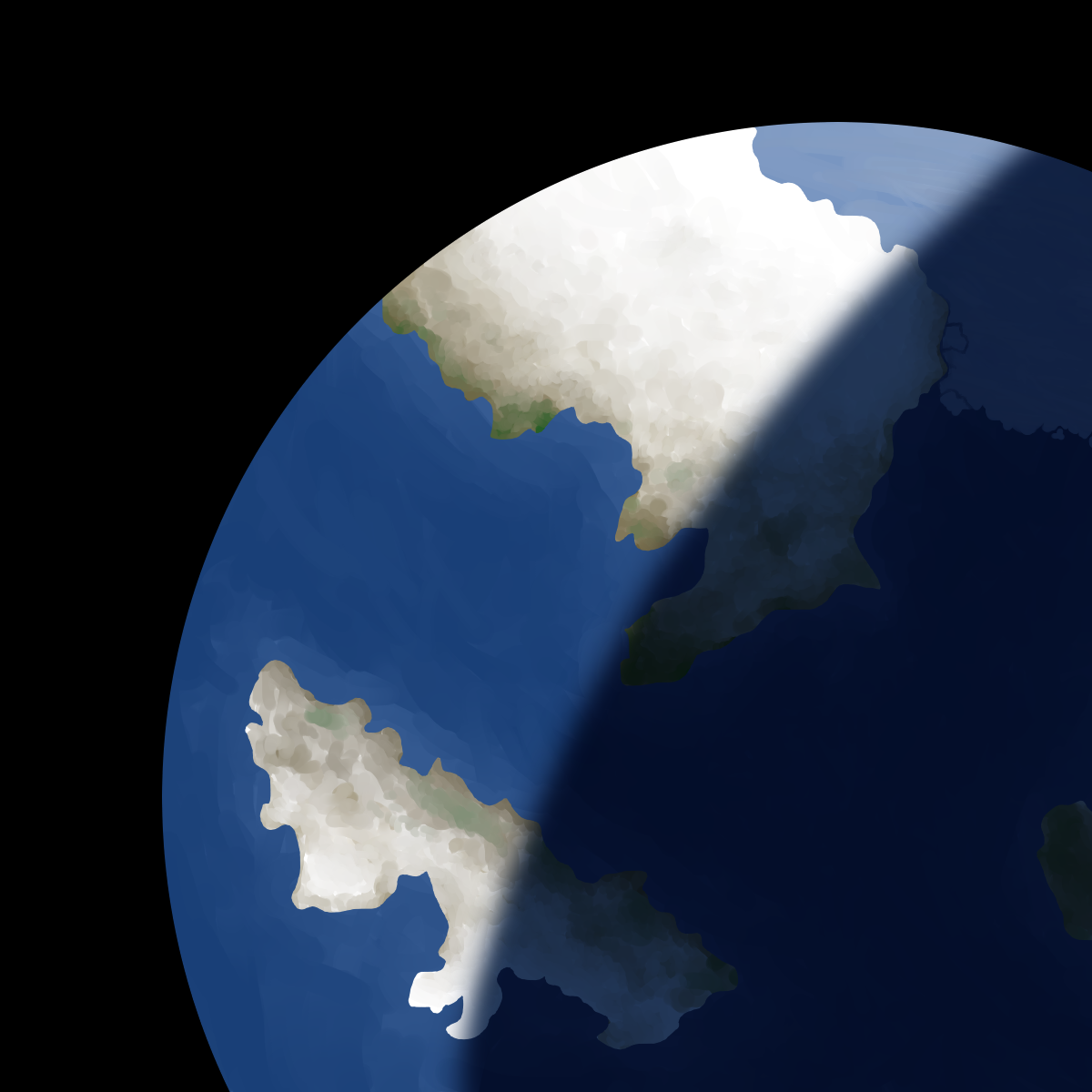
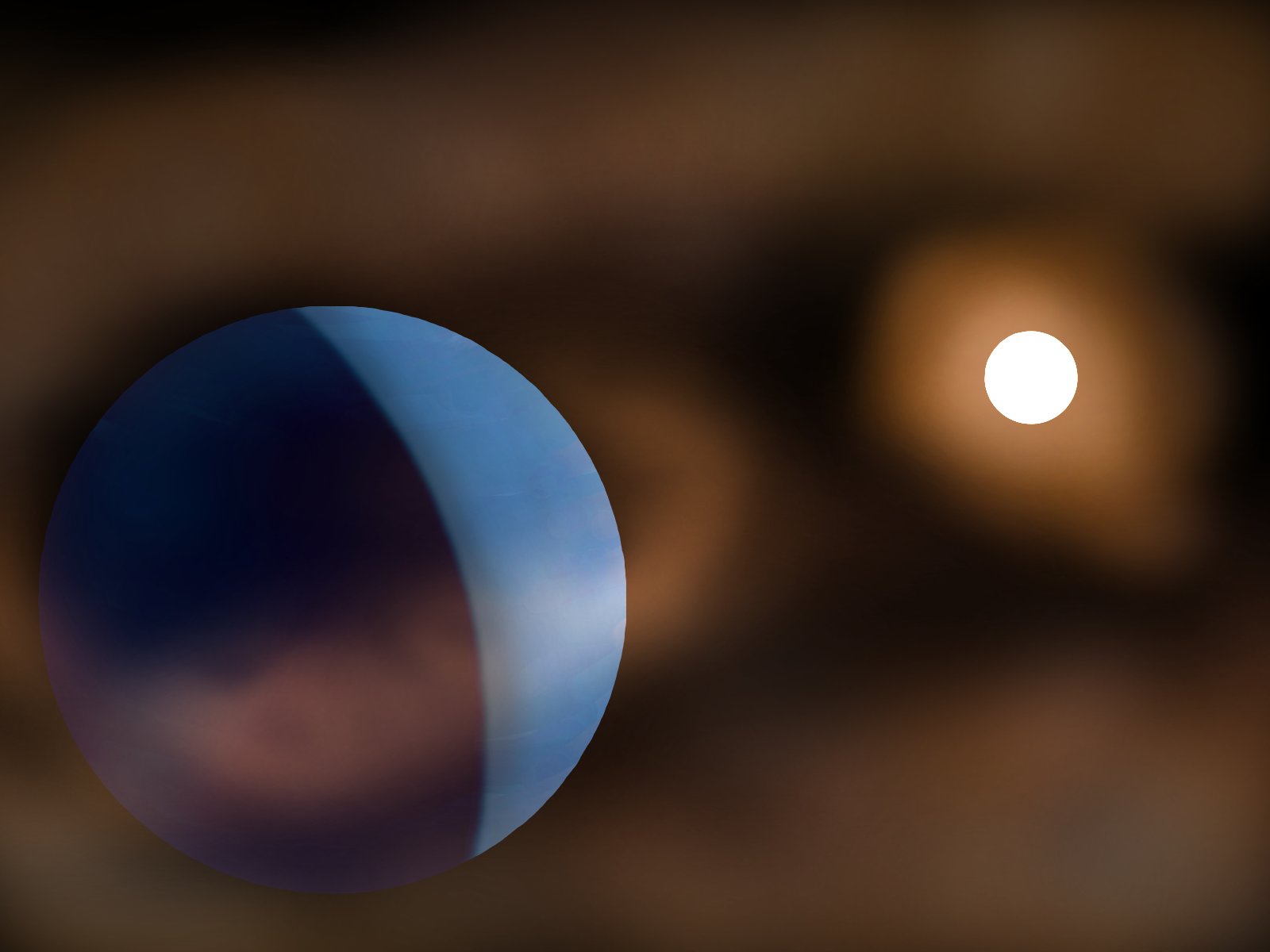
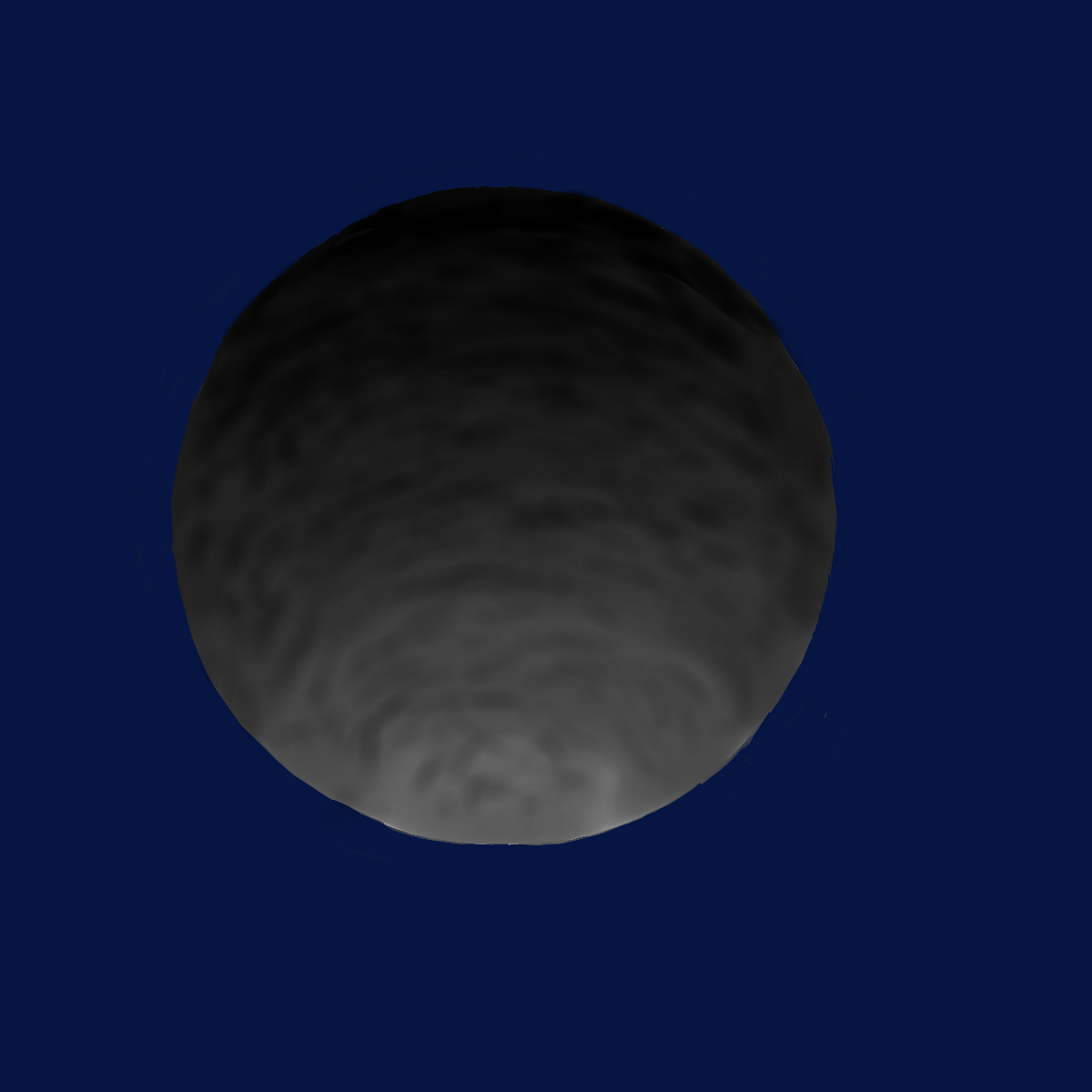
Artist’s concept of Proxima Centauri c (Scenario 1: a rocky planet)
(Image Credit: Yuna Watanabe, Habitable Research Group Moriyama Junior High School )
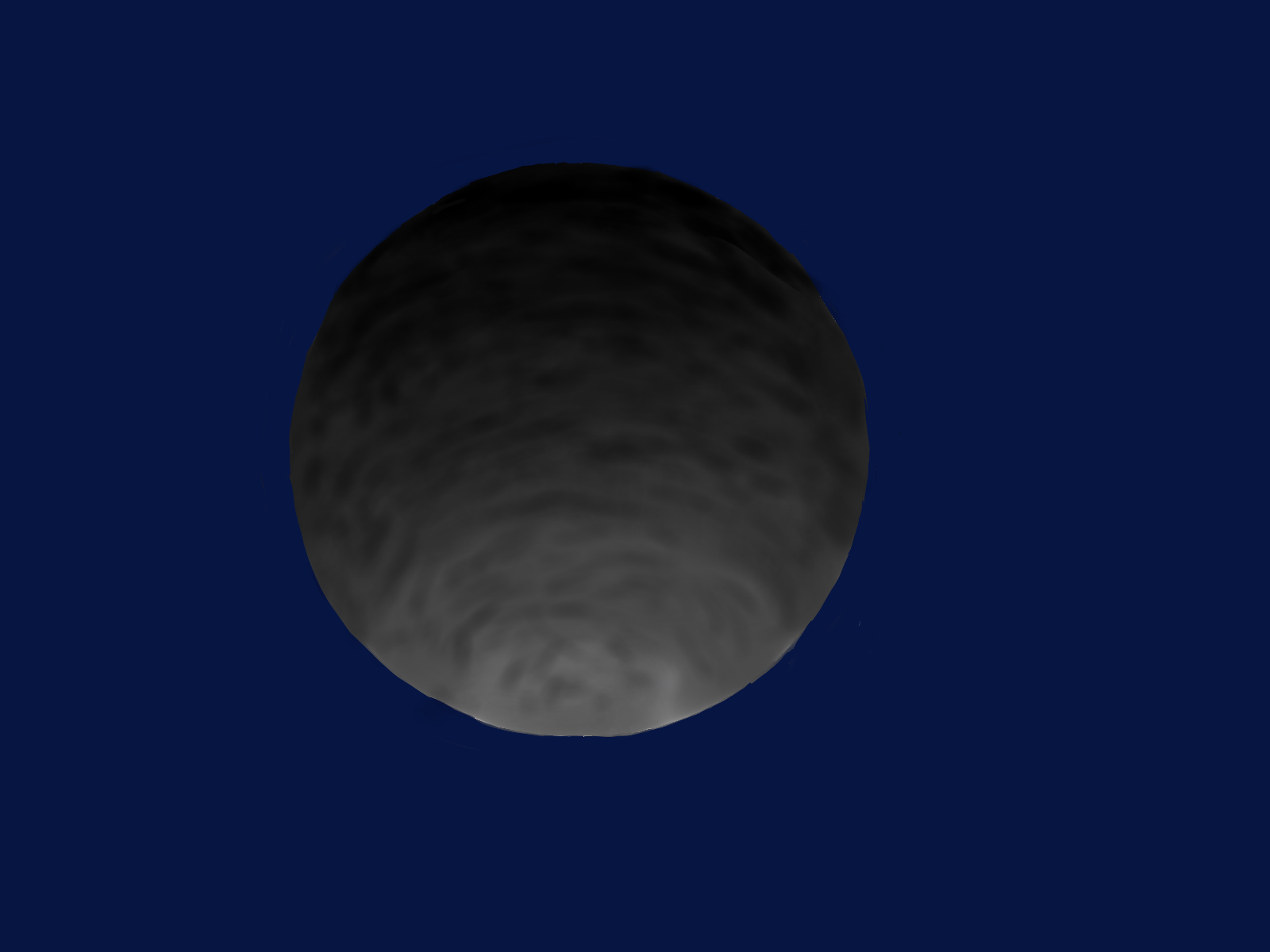
Artist’s concept of Proxima Centauri c (as a rocky planet, part 2)
(Image Credit: Yuna Watanabe, Habitable Research Group Moriyama Junior High School )
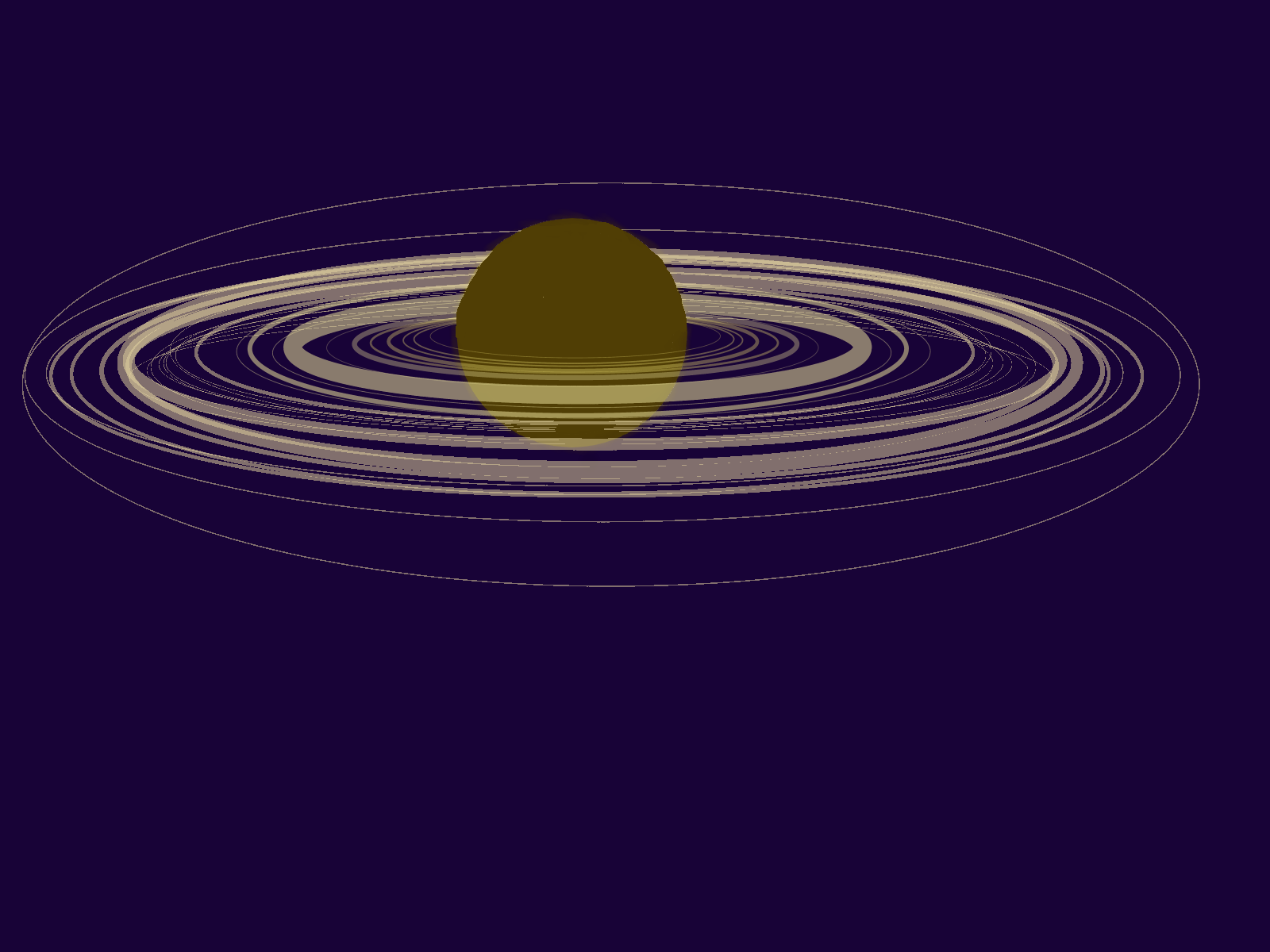
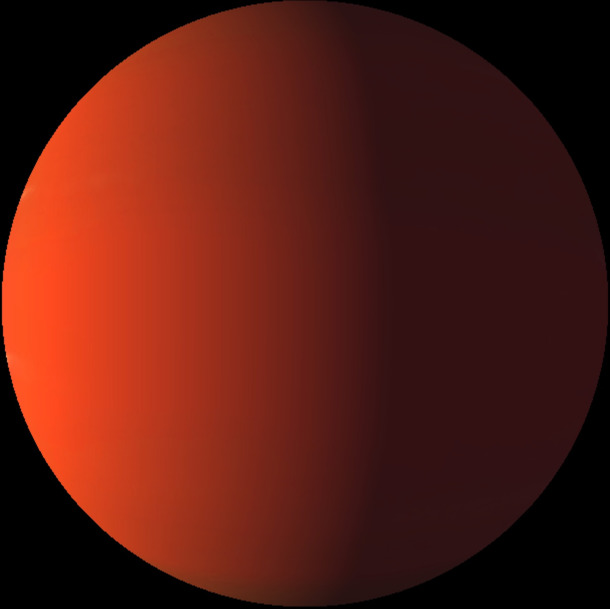
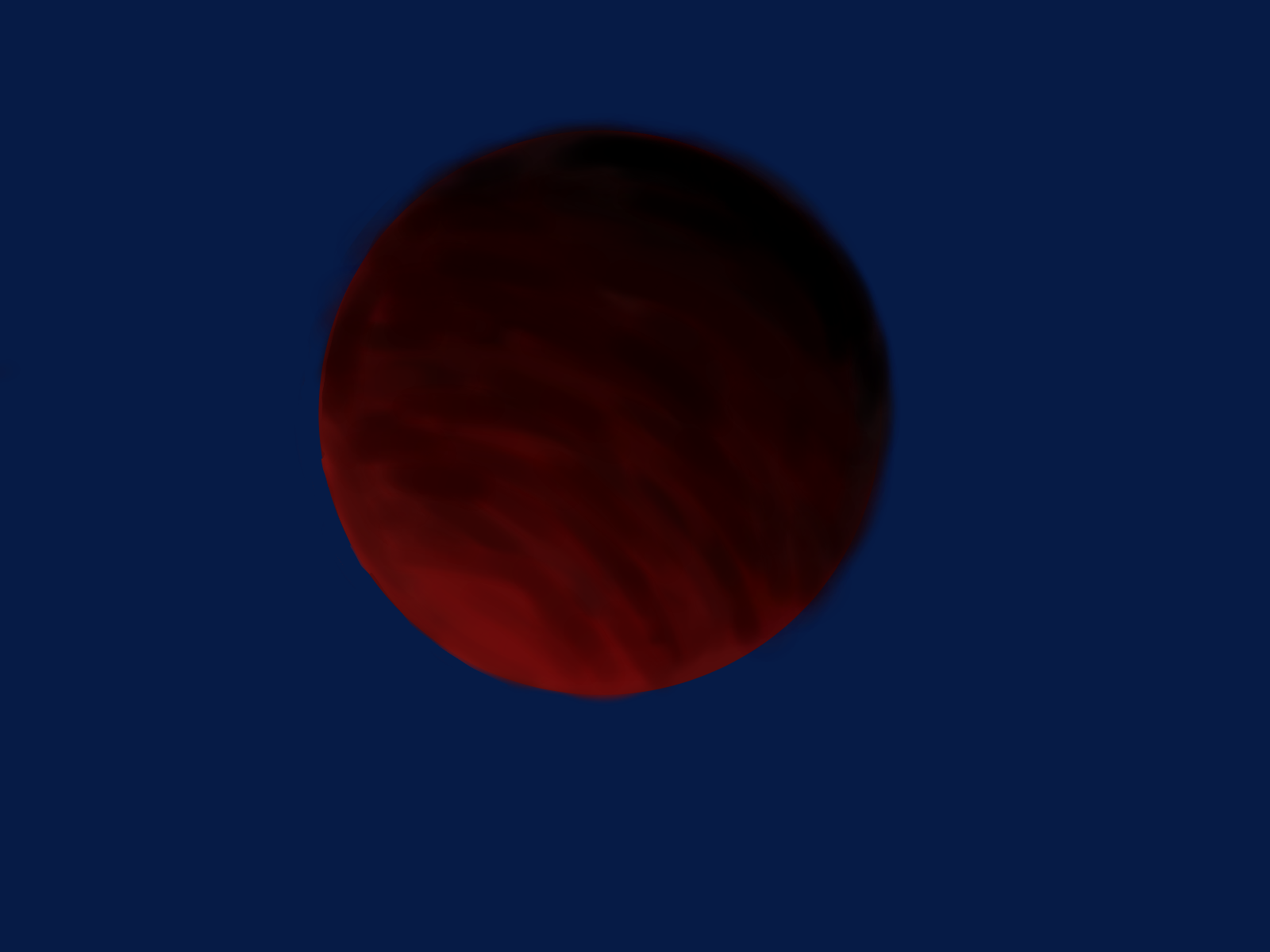
Artist’s concept of Proxima Centauri c (as a gas giant)
(Image Credit: Yuna Watanabe, Habitable Research Group Moriyama Junior High School )
TOI-1231 b

TOI-1231 b is an exoplanet orbiting the star TOI-1231, located 89.7 light-years (27.5 parsecs) from the Solar System; it was announced in 2021.
The star TOI-1231 has an apparent magnitude of 12.3 and an absolute magnitude of 10.1.
This star has 0.5 times the mass of the Sun, a radius of 0.5 times that of the Sun, a surface temperature of 3562 K, and a spectral type of M3V.
The planet TOI-1231 b orbits the star TOI-1231 with an orbital period of 24.2 days and a semi-major axis of 0.13 astronomical units (19,268,205.7 km).

TOI-1231b was discovered by TESS.
Its host star, TOI-1231, is classified as an M-type main-sequence star. Stars smaller than G-type main-sequence stars—the category to which the Sun belongs—are classified as M-type main-sequence stars, and TOI-1231 is only about half the size of the Sun. Due to its apparent magnitude of 12.3 and its location in the constellation Cygnus, it cannot be seen from most regions of Japan.
This article focuses on TOI-1231b, the only planet discovered so far.
Previously, it was predicted that using TESS, only a single planet—rock-free and no larger than Neptune—would be found in the habitable zone of an M-type dwarf star. TOI-1231b is attracting attention as the first planet to meet these criteria.
One of the characteristics of TOI-1231b is that its surface temperature is approximately 330 K (about 57°C).
Future research is anticipated to determine whether liquid water exists and if there is a possibility of life.
(文責:藤井)

If you’d like to learn more about TOI-1231 b, click the link below↓

TOI-1231 b (exoplanetkyoto.org)

HD 40307 g

HD 40307 g was discovered using the radial velocity method, based on data observed by HARPS in 2012. The planet’s host star, HD 40307, is classified as a K type main-sequence star. The K-type star is slightly smaller than our Sun’s G-type star and is actually only 0.77 times the size of the Sun. Unfortunately, the star’s apparent magnitude is only 4.17, so it is not visible from Earth, but it is located 42 light-years away in the Pictor constellation. Six planets have been discovered orbiting HD 40307.

HD 40307 g, is the outermost of the six planets found orbiting the star. The planet orbits about 0.6 the distance between the Sun and Earth in about 197 days.
It is assumed to be about 7.1 times the mass of the Earth, which makes it a rocky planet. The radial velocity method measures the changes in the wavelength of light of a star to detect a planet. This is based on the Doppler Effect; the wavelength of light is shorter when the star is moving toward us and longer when the star is moving away. This means we can only detect the earthward motion, and the measured value versus the true value will be different depending on the observable angle. Therefore, only the lower limit is known.

この惑星の最大の特徴は、ハビタブルゾーンつまり水が液体で存在できる範囲にいることです。さらに、この星は大きさの分類上スーパーアースに分類されますが、初めて発見されたハビタブルゾーンにいるスーパーアース型の太陽系外惑星になります。くわえて、潮汐ロックがかかっている可能性が比較的低くなっています。潮汐ロックとは公転周期と自転周期が完全に一致して、主星に向けられる面がいつも同じになることです。比較的多くのハビタブル惑星が多く見つかっているより軽い恒星系では主星の温度が低いため主星と惑星の距離が近くなり潮汐ロックがかかっている可能性が高くなってしまいます。潮汐ロックがかかってしまうと主星に向いている面の気温が高くなり、逆に逆面では気温が低くなり生物が生きていくのにあまり適さない環境になってしまいます。HD 40307gは比較的その恐れが少なく生物が存在する希望がより高くなります。
(大山 航)

Kepler-1649cについてのより詳しいデータは以下のデータベースページをご参考に。

http://www.exoplanetkyoto.org/exohtml/HD_40307_gJP.html

• M. Mayor, S. Udry, C. Lovis, F. Pepe, D. Queloz, W. Benz, J.-L. Bertaux, F. Bouchy, C. Mordasini, D. Segransan (2009). “The HARPS search for southern extra-solar planets. XIII. A planetary system with 3 Super-Earths (4.2,6.9&9.2Earth masses)”. Astronomy and Astrophysics 493 (2): 639-644
• Tuomi, Anglada-Escude, Gerlach, Jones, Reiners, Rivera, Vogt, Butler, Mikko, Guillem, Enrico, Hugh R. R., Ansgar, Eugenio J., Steven S., R. Paul (2012年). “Habitable-zone super-Earth candidate in a six-planet system around the K2.5V star HD 40307”

AU Mic b

AU Microscopii (hereinafter referred to as AU Mic) is a star located in the southern constellation Microscopium about 32.3 light-years (9.79 Parsecs) away from our solar system. AU Mic is a young red dwarf star that is classified as an M1 Ve. Its apparent magnitude is 8.7 and its temperature is 3730 K. It is a small star, at only 60% the radius of our sun, and it radiates only 9% of our sun’s light.

The most interesting thing about AU Mic is the debris disk found around it, which is circumstellar disk of dust that orbits the star. This disk was found and then confirmed in 2003 by Paul Kalas and collaborators using the University of Hawaii 2.2-m telescope on Mauna Kea, Hawaii. The disk was detected from about 35 to 210 astronomical units from the star, a region where dust lifetimes exceed the present stellar age. The total amount of dust that makes up the disk is thought to be at least 6 lunar masses.

Within the debris disk, a planet was recently discovered. AU Mic b orbits its host star in about 8.46 days at a distance of 0.07 astronomical units. It has a radius 0.4 of Jupiter and a mass of about 0.18 of Jupiter. The fact that a planet exists within the debris disk offers scientists a chance to study planet formation and evolution.

(Ling Cassandra)

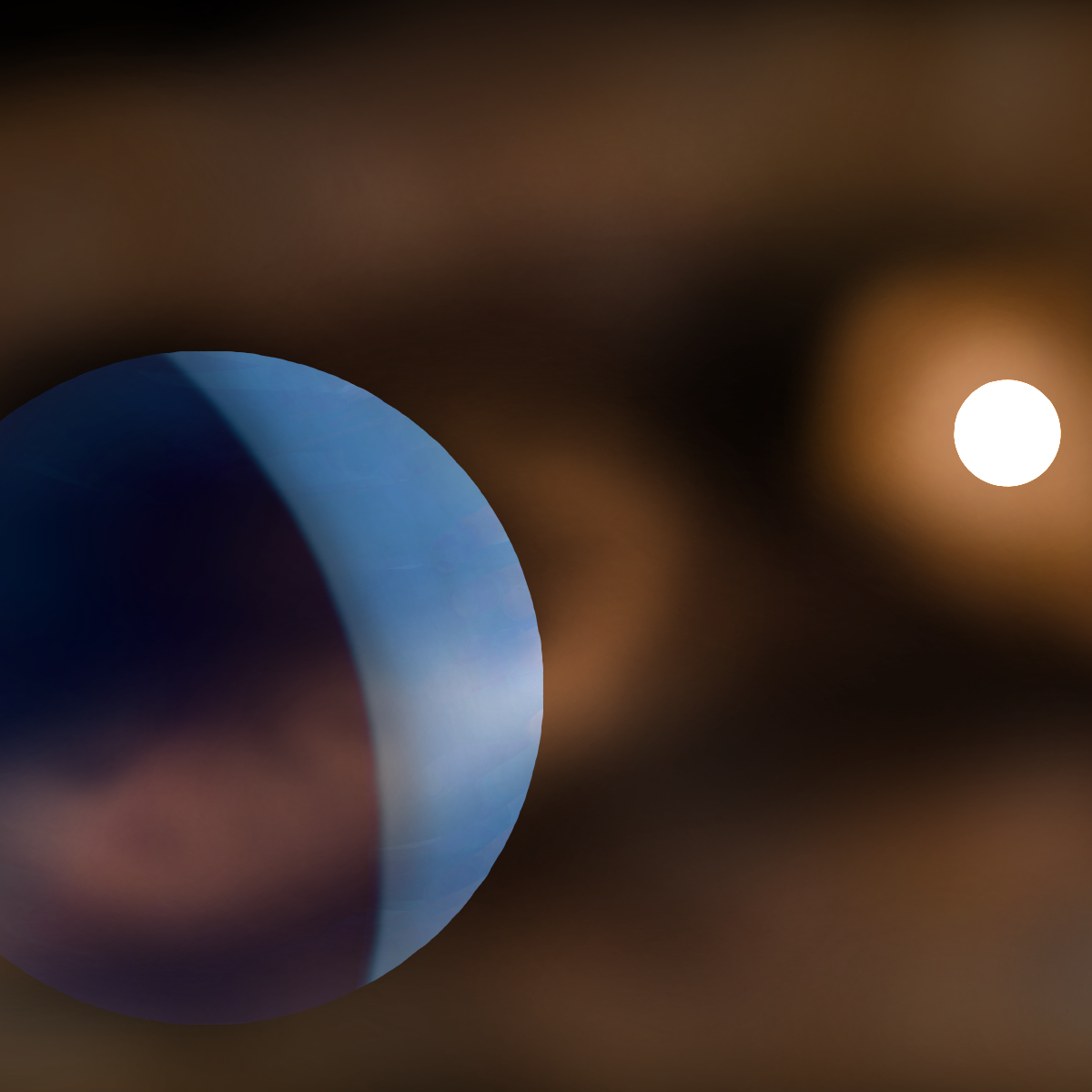
Imaginary Picture of AU Mic b (Ryusuke Kuroki, Yosuke A. Yamashiki)
Size of AU Mic & AU Mic b in comparison with our Solar System
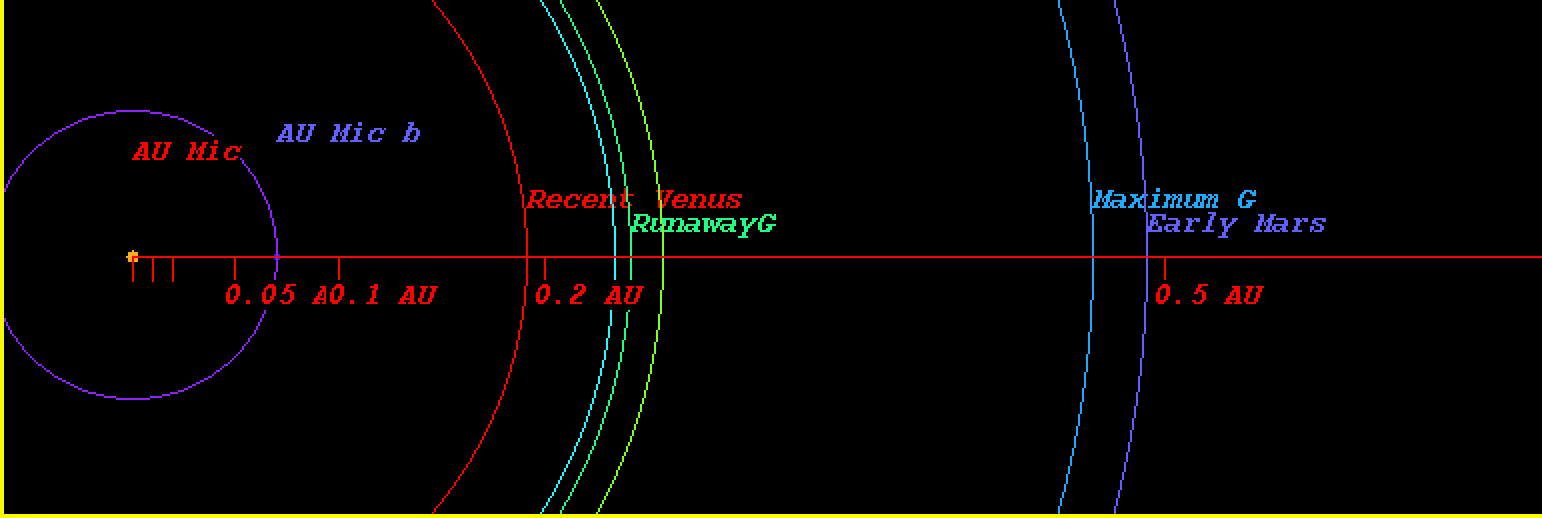
Habitable zone calculated based on Kopparapu et al.(2013) around the star AU Mic

For more information on AU Mic, please visit the ExoKyoto database:

http://www.exoplanetkyoto.org/exohtml/AU_Mic_b.html

Imaginary Picture of AU Mic b by Miu Shimizu

TOI-700 d

TOI-700 is a red dwarf located in the Dorado constellation, about 101 light-years from Earth. Its surface temperature is 3480K, it is a spectral H2V type star, and its mass and radius are roughly four times that of our sun. The name of the star, TOI, stands for Tess Objects of Interest and refers to a catalog of celestial bodies that have shown the existence of orbiting planets using the TESS exoplanet search satellite. Objects listed in the TOI catalog are also observed with methods other than the transit method, such as Doppler spectroscopy and direct imaging. TOI-700 has also been referred to as Gaia DR2 5284517766615492736 because it was observed by the Space Telescope Gaiain 2013, launched by the ESA.

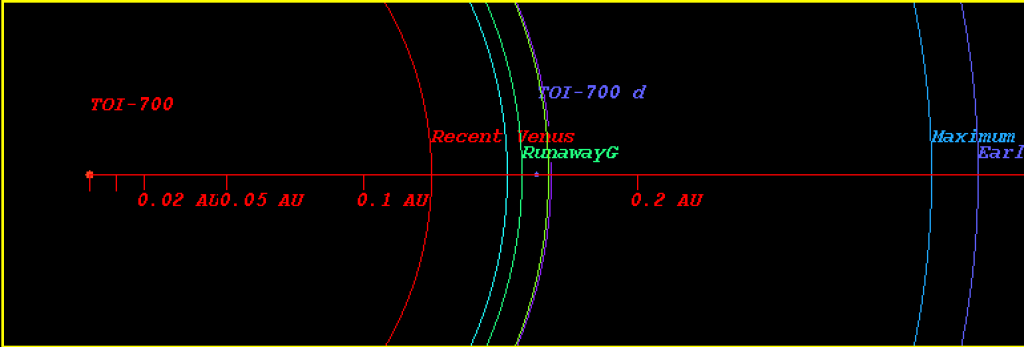
TOI-700 was observed with the transit method, and three planets were discovered orbiting around it. TOI-700d, which is the furthest of the planets at 0.16 AU, is a rocky planet 1.2 times the size of Earth, it is also likely to be within the area where water can exist in a liquid state (habitable zone). TESS has discovered a number of exoplanets since its launch in 2018, but this is the first Earth-sized planet to be found in the habitable zone.

According to the ExoKyoto Spectral Module, TOI-700d receives an estimated 85.72% of infrared light from its star, 13.97% is visible, and 0.30% is ultraviolet.

TOI-700d has a radius of about 1.19 that of the Earth, and its mass has not been measured yet, but it is estimated to be around 2.26 Earth’s mass using ExoKyoto’s mass estimation module. Its orbit is just outside the runaway greenhouse limit of Kopparapu et al. 2013 at 37 days. The planet could be tidally locked and it is possible that one side could be covered in plants.

For more information, visit our database page

http://www.exoplanetkyoto.org/exohtml/TOI-700_d.html

GJ 699 b – Barnard’s star b

(Imaginary picture of Barnard’s star b – GJ 699 b   credit: Ryusuke Kuroki, Natsuki Hosono and Yosuke A. Yamashiki)

GJ 699 b (Barnard’s star b) is a Super Earth located about 6 light-years from our solar system, which orbits an M-type star, Barnard’s star, in about 233 days. It is located just on the snow line (the planetary orbit at which water freezes) of its host star, and the surface temperature is estimated to be about 105 Kelvin (minus 168℃). Since it was discovered by the radial velocity method, its mass has only been estimated but is thought to be about 3.2 times as heavy as the earth.

Barnard’s star is the closest star to Alpha Centauri, the star that is closest to our solar system. In fact, in the 1960’s American astronomer Pete van de Kamp thought he discovered a planet around Barnard’s star. Therefore, in the 1970s, it was common knowledge that there were planets orbiting the star, and many science fiction works based on these planets were born. However, this “discovery” was not confirmed by other telescopes, and it was later pointed out that it was a data error by the observation device, so it became a “phantom planet”.

The planet that was eventually discovered is different from van de Kamp’s “planet,” but it became a huge discovery all over the world because of how popular Barnard’s star has become. The planet  GJ 699 b was finally discovered as a result of continued long-term observation with multiple telescopes for more than 20 years, from June 1997 to November 2017. Since the very first exoplanet was discovered in October 1995, it is clear the search for a planet orbiting Barnard’s star set out soon after. 

From observation data to date, it seems that no planet larger than Earth orbits other M-type stars, and there is no planet larger than Earth in the habitable zone. So, unfortunately, it seems that there is no “second earth” orbiting the stars next to our solar system. However, there is a possibility of a different type of cool Super Earth that could inspire new science fiction.

Below is the analysis for GJ 669 b by ExoKyoto. The estimated temperature of the planet is 105 Kelvin (minus 168℃) according to a published paper, which is about the surface temperature of Jupiter’s moon Galileo, and it is thought to be an icy world in which liquid water cannot exist without an internal heat source. The average radiant energy from Barnard’s star is estimated to be 27.49 W / m2, which is less than Jupiter but about twice that of Saturn. However, since most of the rays are infrared rays (estimated visible light is 9.99%, infrared is 89.81%), and since much of the energy contributes directly to heat, it may be a little warmer than the albedo in the visible light region.

The planet radius has not been estimated because it is measured by the radial velocity method, but ExoKyoto estimated it to be about 1.37 times the radius of Earth (0.12 times that of Jupiter).

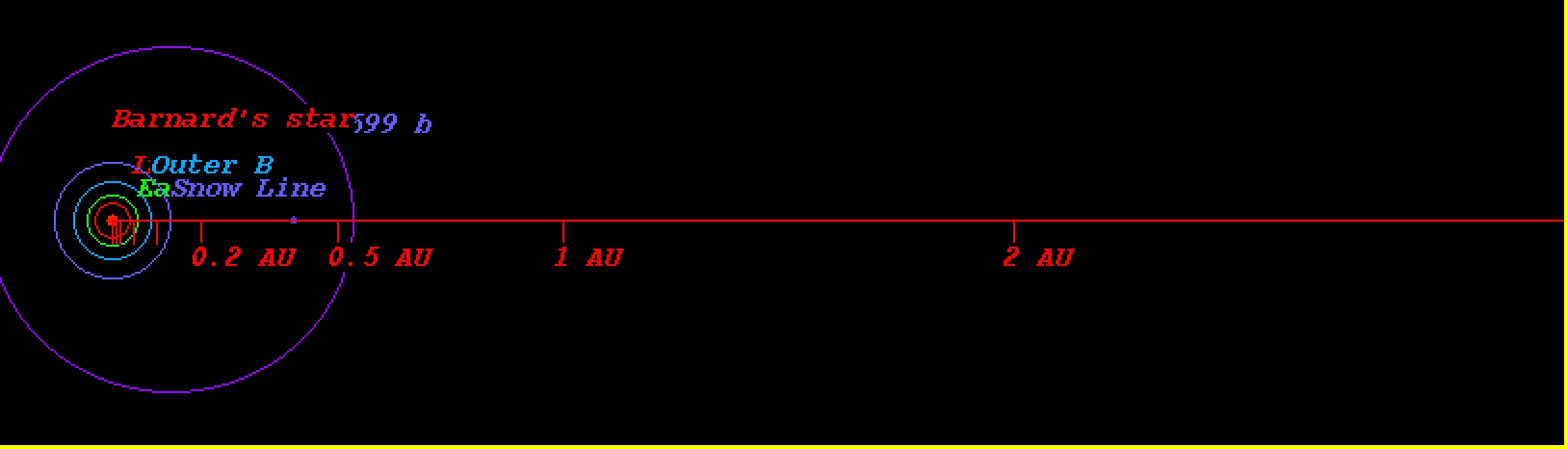
GJ 669 b has an elliptical orbit with an eccentricity of 0.32,  so it is located within 0.3 astronomical units from Barnard’ star at its closest distance, and about 0.5 astronomical units when moving away from it. Therefore, the planet might be subject to extreme seasons. However, the snowline (the position of the asteroid belt in the solar system) is located inside its orbit, so even if the maximum greenhouse effect limit by Kopparapu is used, it will be outside this limit (both are 0.13 astronomical units). It is considered to be a “cold” planet, much more than the previously described.

Furthermore, the host star has a low amount of activity, and radiation due to solar flares seem to be small, even considering the sufficient distance from its host star.

For more information on GJ 669 b, please visit the following database.

http://www.exoplanetkyoto.org/exohtml/GJ_699_bJP.html

Size of GJ 699 b – Barnard’s star b

(Orbit of GJ 699 b – Barnard’s star b)
Barnard

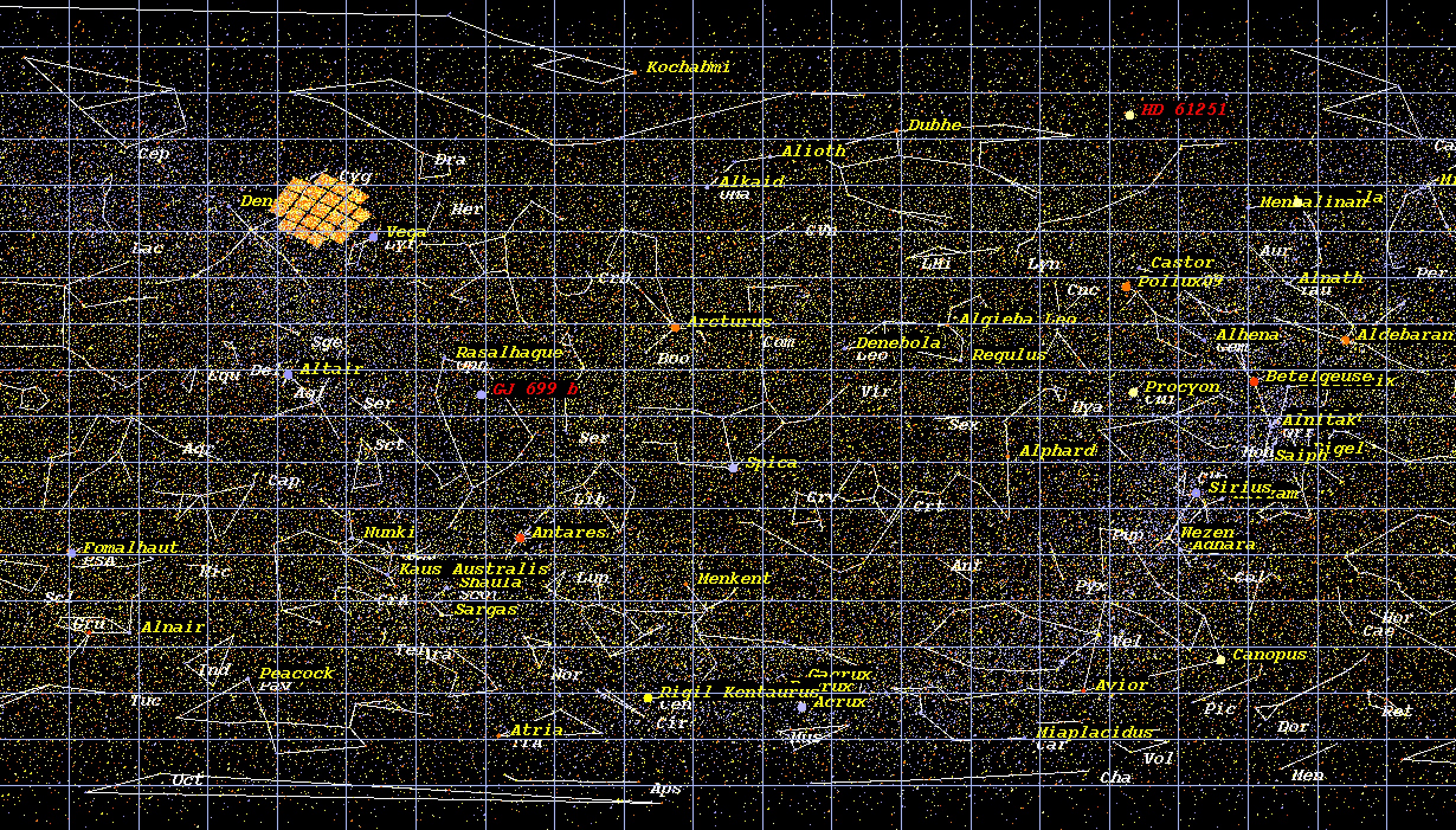
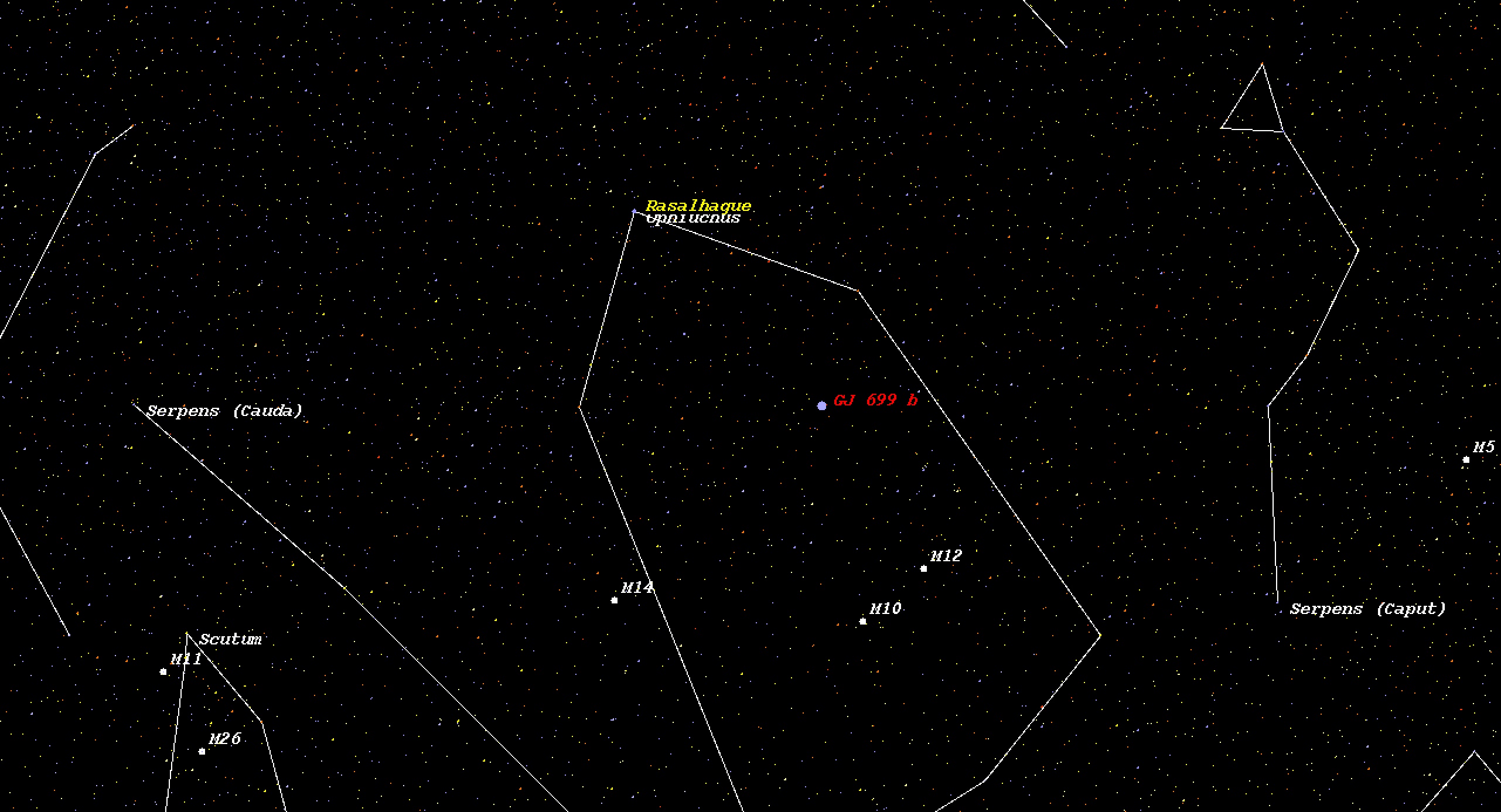
(Position of GJ699 b – Barnard’s star b)

(Position of GJ699 b – Barnard’s star b)