Category: Famous Exoplanets

WASP-121 b

WASP-121 b is an exoplanet orbiting the star WASP-121, located 853.8 light-years (parsecs) from the Solar System, and was announced in 2015.

The star WASP-121 has an apparent magnitude of 10.4 and an absolute magnitude of 3.3.

This star has 1.4 times the mass of the Sun, 1.5 times its radius, a surface temperature of 6,460 K, and a spectral type of F6V.

In this star’s planetary system, WASP-121 b orbits WASP-121 with an orbital period of 1.3 days and a semi-major axis of 0.03 astronomical units (3,805,769.8 km).

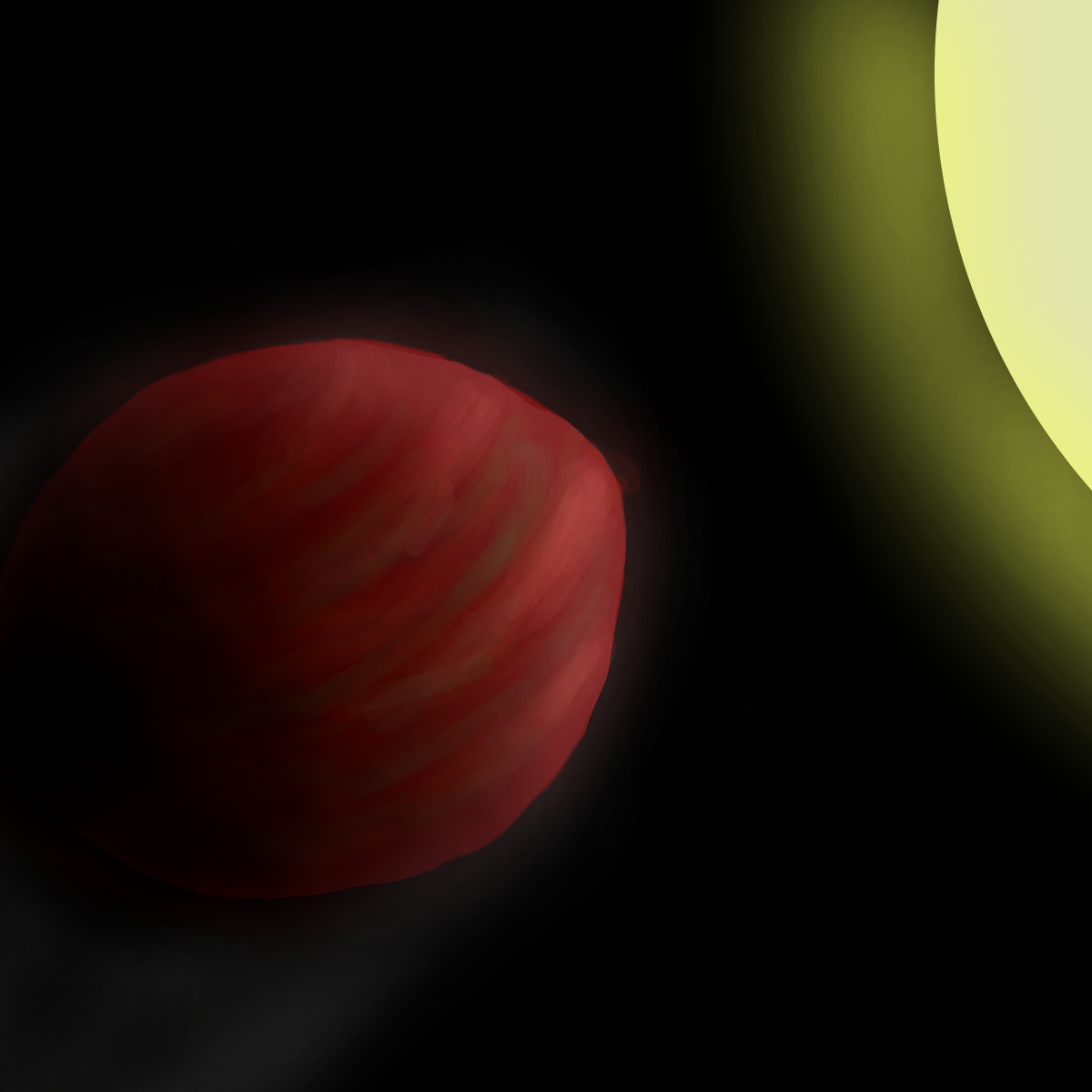
It is a hot Jupiter with an orbital period nearly identical to its rotation period. Could the temperature difference between the day and night hemispheres cause rain of rubies or sapphires?

It was discovered in 2015 through observations by the SuperWASP exoplanet search project. It is a scorching giant gas planet located approximately 880 light-years from Earth in the direction of the constellation Lyra, orbiting the F-type main-sequence star WASP-121. It has about 1.2 times the mass of Jupiter and about 1.8 times its radius, orbiting at a very close distance of 3.8 million km from its star (WASP-121) in just over a day (about 30 hours). With a surface temperature of about 2,000 K and an upper atmosphere reaching about 2,500 K, it is one of the “hot Jupiters.” A distinctive feature is that its rotation period is nearly identical to its orbital period, resulting in a day side that always faces the star (while the other side, the night side, always faces away). Since temperatures exceed 1,500°C even on the night side, the clouds there are composed of metals such as iron, magnesium, chromium, and vanadium, rather than water clouds like those on Earth. In 2017, observations by the Hubble Space Telescope revealed that the atmosphere of WASP-121 b contains water vapor, vanadium(II) oxide, and titanium(II) oxide, making it almost certain that a stratosphere exists.

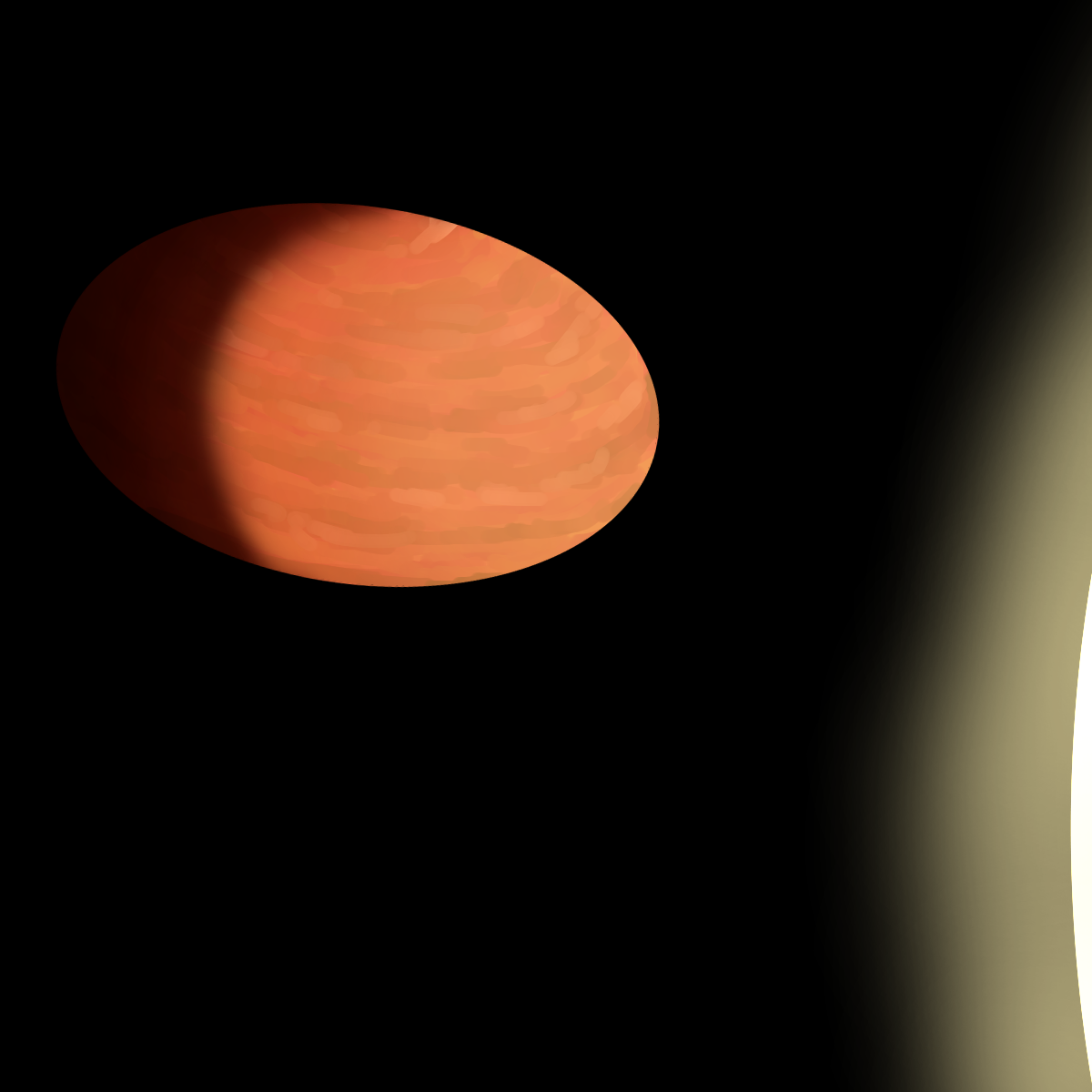
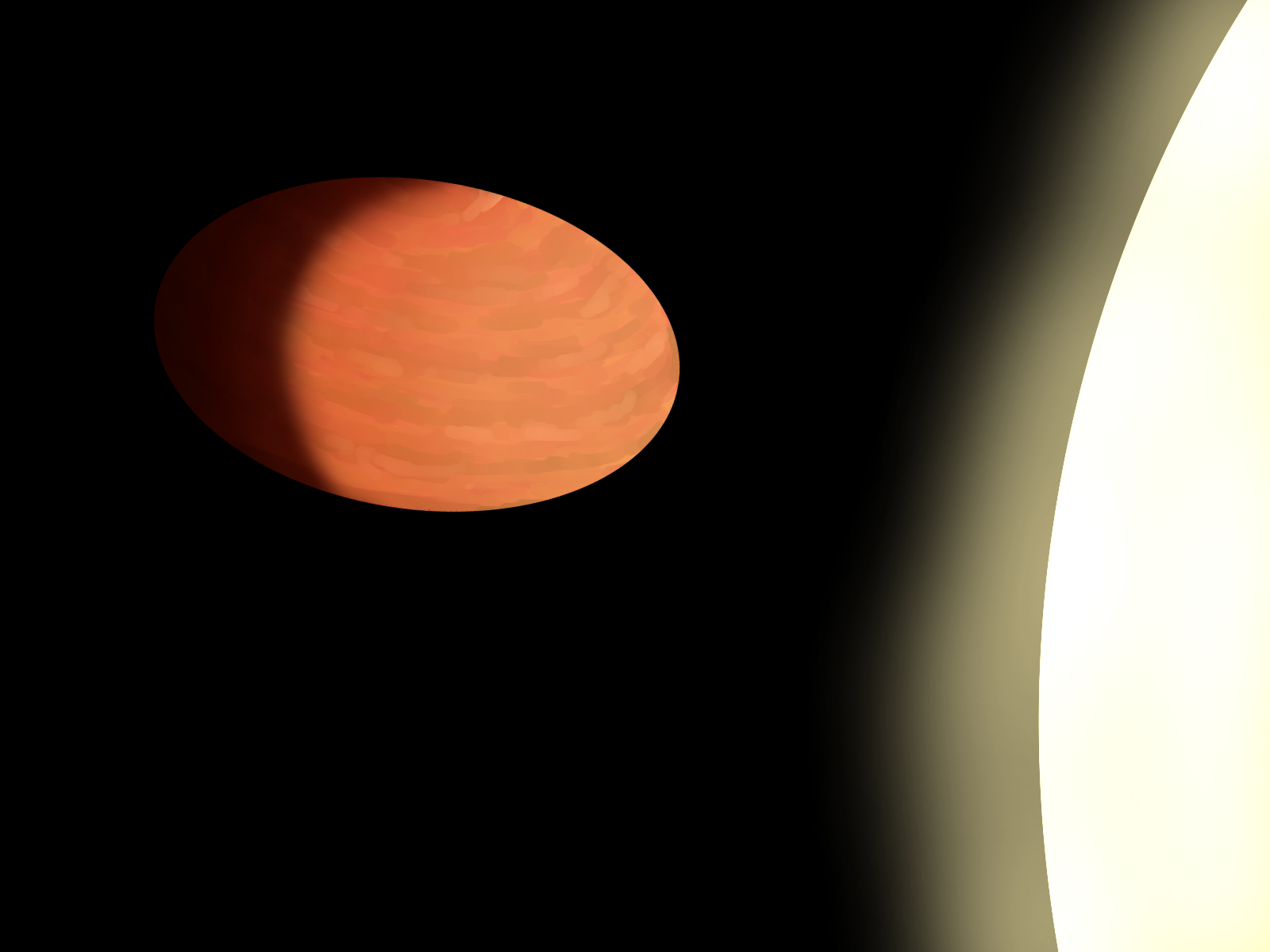
In 2019, due to its proximity to the star, WASP-121 b is believed to be on the verge of being torn apart by tidal forces, resulting in a football-like shape. David Sing and his team used observational data from the Space Telescope Imaging Spectrograph (STIS) aboard the Hubble Space Telescope to confirm that even metals such as iron and magnesium, which are condensed within the clouds, are flowing out into space along with lighter elements (hydrogen and helium).

In 2022, spectral analysis of both the day and night hemispheres of WASP-121 b using the Hubble Space Telescope revealed a water cycle different from Earth’s. In the day hemisphere, which always faces the star, the temperature in the upper atmosphere exceeds 3,000°C, causing water to evaporate and further decompose into hydrogen and oxygen. In contrast, temperatures in the upper atmosphere of the night side drop to 1,500°C. This 1,500°C temperature difference between the day and night sides generates strong winds that carry hydrogen and oxygen to the night side. There, the hydrogen and oxygen recombine to form water vapor, which is then blown back to the day side, creating a cycle. According to astrophysicist Tansu Daylan, these strong winds are believed to be capable of moving clouds across the entire planet in about 20 hours. While various metallic elements (vanadium, iron, chromium, calcium, sodium, magnesium, nickel, etc.) have been confirmed on WASP-121 b, aluminum and titanium were not detected. The research team speculates that this is because aluminum and titanium have condensed and rained down onto the surface. When aluminum combines with oxygen in the atmosphere, it forms a mineral called “corundum.” If corundum contains impurities such as chromium, iron, titanium, or vanadium, it becomes ruby or sapphire. Therefore, the night side of WASP-121 b may be covered in liquid ruby or sapphire.

Delrez, L. et al. (2016). “WASP-121 b: a hot Jupiter close to tidal disruption transiting an active F star”. Monthly Notices of the Royal Astronomical Society 458 (4): 4025-4043. arXiv:1506.02471. Bibcode: 2016MNRAS.458.4025D. doi:10.1093/mnras/stw522. ISSN 0035-8711.
Evans, Thomas M. et al. (2017). “An ultrahot gas-giant exoplanet with a stratosphere”. Nature 548 (7665): 58-61. arXiv:1708.01076v1. Bibcode: 2017Natur.548…58E. doi:10.1038/nature23266. ISSN 0028-0836.
David K. Sing. et al. (2019). “The Hubble Space Telescope PanCET Program: Exospheric Mg ii and Fe ii in the Near-ultraviolet Transmission Spectrum of WASP-121b Using Jitter Decorrelation”.The Astronomical JournalVolume 158Number 2https://iopscience.iop.org/article/10.3847/1538-3881/ab2986/pdf
Mikal-Evans, T., Sing, D.K., Barstow, J.K. et al. Diurnal variations in the stratosphere of the ultrahot giant exoplanet WASP-121b. Nat Astron 6, 471–479 (2022).https://doi.org/10.1038/s41550-021-01592-w An exotic water cycle and metal clouds on the hot Jupiter WASP-121 b | Max Planck Institute for Astronomy (mpia.de)

(文責:小川)
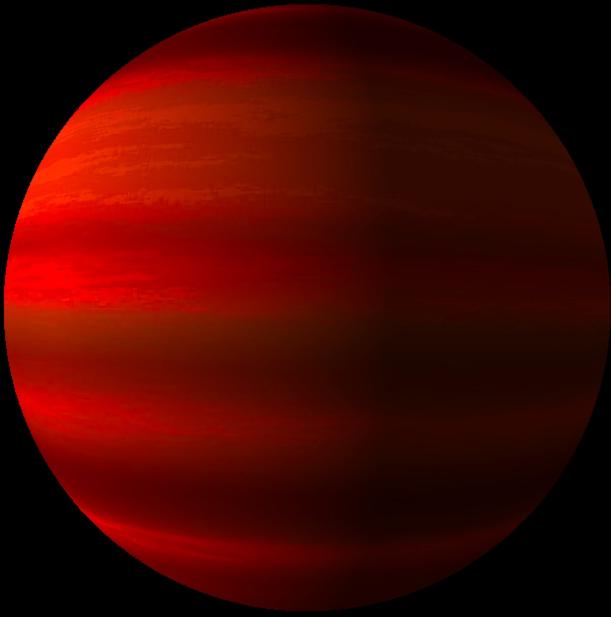
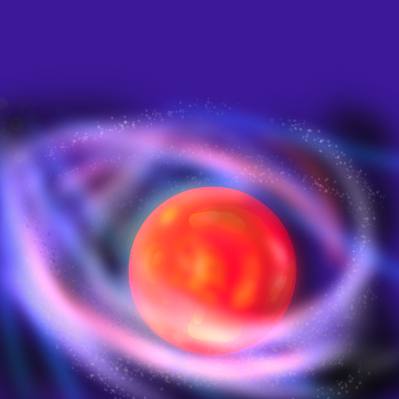
Imaginary picture of WASP-121 b
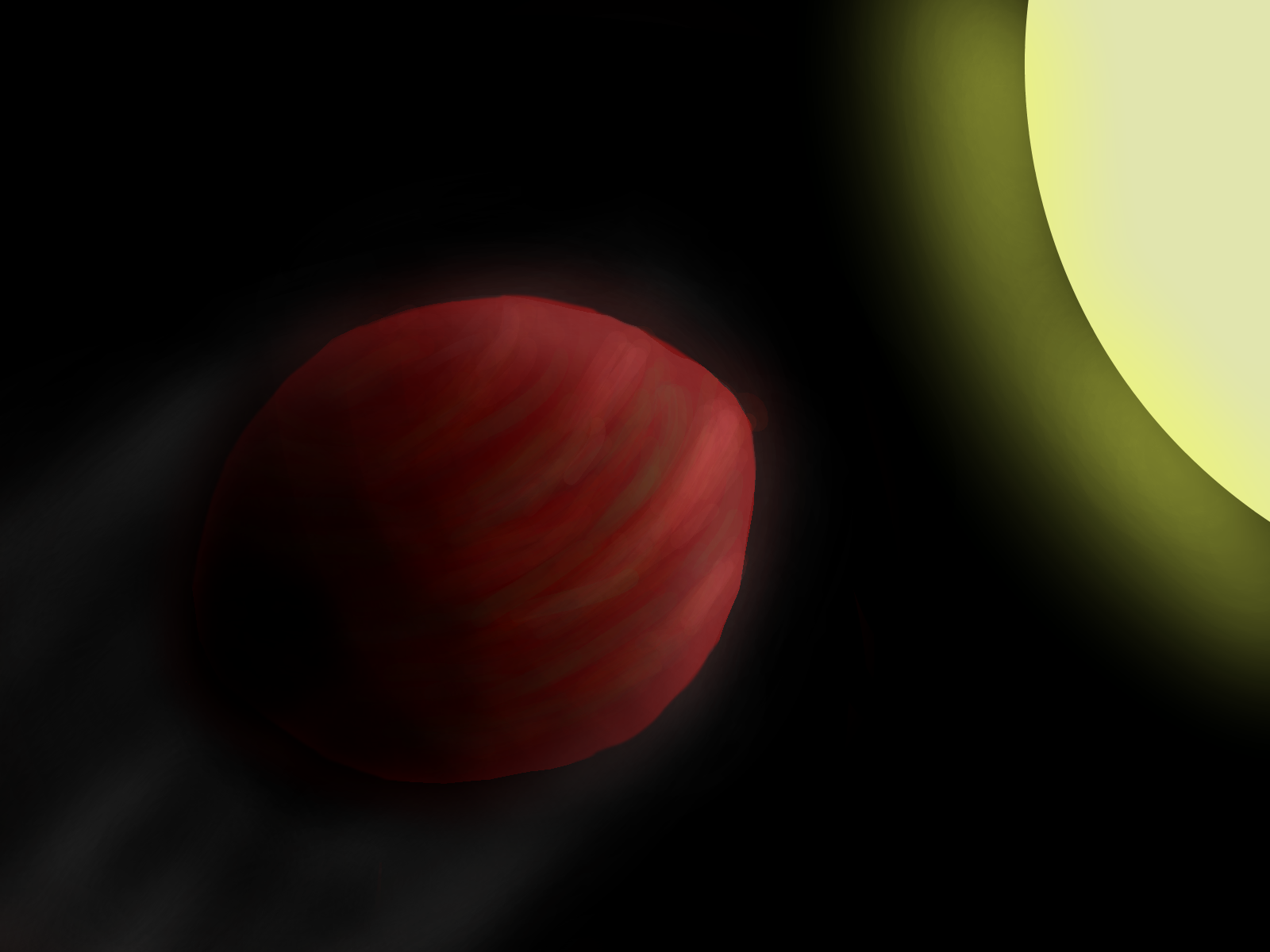
Imaginary Picture of WASP-121 b: Illustrated by Yuna Watanabe


Proxima Centauri d

Proxima Centauri d is an exoplanet orbiting the star Proxima Centauri, located 4.2 light-years from our solar system.
The host star Proxima Centauri has an apparent magnitude of 11.1 and an absolute magnitude of 15.6.
It is a spectral type M5.5V star with about 0.1 times the mass of our sun and 0.1 times the radius, and the surface temperature is thought to reach 3050 degrees.
The exoplanet Proxima Centauri d orbits in about 5.2 days with an orbital radius of 0.03 astronomical units (4315898.6 km).

Proxima Centauri is about 4.2 light years away from the Earth and is considered the closest star to the Sun. The exoplanet that orbits it, Proxima Centauri d has a short orbital period of around 5.17 days. Proxima Centauri d orbits close to its host star. Hence, its blackbody temperature (assuming an albedo of 0.3) is calculated to be about 297 K. This is a temperature at which liquid water can exist. It is due to the low temperature of the host star, which is an M-type star. This means the exoplanet is located within the habitable zone.

The European Southern Observatory officially reported the discovery of Proxima Centauri d in February 2022. Previously, two other planets were confirmed to orbit Proxima Centauri, but although the star system has attracted attention, the discovery of this planet had not yet been reported. The radial velocity method was used to observe the planet (also called Doppler spectroscopy), which obtains information about the planet by observing the slight flicker of the host star during the planet’s orbit, which is affected by the planet’s mass. However, Proxima Centauri d’s mass is only about a quarter of the Earth, so its effect on the star is small. According to the observatory, the radial velocity of Proxima Centauri d was only about 40 cm per second. This observation required extreme precision, and took two years from the first detection of the planet’s existence to the time its discovery was reported.
The discovery of such a small planet is important because it could lead to the discovery of many more minor habitable planets that have not been discovered yet.

TOI-2285 b

TOI-2285 b is an exoplanet orbiting the star TOI-2285, located 138.3 light-years (parsecs) from the Solar System, and was announced in 2021.
The star TOI-2285 has an apparent magnitude of 13.4 and an absolute magnitude of 10.3.
This star has 0.5 times the mass of the Sun, a radius of 0.5 times that of the Sun, a surface temperature of 3,491 K, and a spectral type of M4.
In this star’s planetary system, TOI-2285 b orbits the star TOI-2285 with an orbital period of 27.3 days and a semi-major axis of 0.14 astronomical units (20,390,189.8 km).

TOI-2285b was detected using the transit method by TESS. It was discovered by a team led by the University of Tokyo and the Center for Astrobiology at the National Institutes of Natural Sciences.

It is a super-Earth with an orbital period of 27.3 days, a radius 1.73 times that of Earth, and a mass 19.52 times that of Earth, orbiting its host star, TOI-2285, at a distance of approximately 0.14 astronomical units. Although it is slightly larger than Earth, it is on the smaller side among the exoplanets discovered to date.

The host star, TOI-2285, is a red dwarf with a surface temperature of approximately 3,500 K. Compared to the Sun, it is smaller, with a radius of 0.5 times and a mass of 0.5 times that of the Sun.

TOI-2285b is attracting attention due to the possibility that it may harbor a layer of liquid water. While water would quickly evaporate on a rocky planet with a thin atmosphere, Dr. Akihiko Fukui, an astronomer at the University of Tokyo, states, “Even if a rocky planet exists outside the habitable zone, it may retain liquid water under a hydrogen atmosphere.”

Since the host star is bright, detailed observations are possible, suggesting that further research will likely yield new insights.

We can expect to learn more about the planet’s interior and confirm the presence of water.


(文責:石原 一真)


References:


For more information about this planet, please visit the link below.

http://www.exoplanetkyoto.org/exohtml/TOI-2285_bJP.html

AB Aurigae b

AB Aur b is an exoplanet orbiting the star AB Aur, located 469.7 light-years (parsecs) from the Solar System, and was announced in 2008.
The star AB Aur has an apparent magnitude of 7.1 and an absolute magnitude of 1.3.
This star has 2.4 times the mass of the Sun, a radius 1.7 times that of the Sun, a surface temperature of 9,600 K, and a spectral type of A0V.

A first in history: Direct imaging of a baby planet. A protoplanet that continues to grow even now.

In Japanese, it is referred to as “AB Aurorae b.” It is a protoplanet located within the gas disk of AB Aurorae, a young star (an Ae/Be-type star) believed to be only about 2 million years old. It is approximately 508 light-years from Earth and orbits at a distance of about 93 astronomical units from its host star (AB Aurorae). Its mass is predicted to be 9 to 12 times that of Jupiter, and its radius is estimated to be about 2.75 times that of Jupiter.


In 2022, a research group led by Thayne Currie of the National Astronomical Observatory of Japan’s Hawaii Observatory announced that they had successfully imaged a protoplanet in the very process of forming using the Subaru Telescope and the Hubble Space Telescope. This is believed to be the first time in history that a protoplanet, still existing within the gas and dust that will eventually form a planet, has been discovered through imaging.

Furthermore, in contrast to the “core accretion model”—in which dust gradually aggregates to form a planet within a typical protoplanetary disk—a different process known as the “disk self-gravity instability model” was proposed. This model suggests that at distances exceeding 50 astronomical units from the star, a portion of the protoplanetary disk splits and contracts under its own gravity, leading to relatively rapid planet formation. This provided important insights into theories of planet formation.

The Subaru Telescope’s SCExAO (SCExAO) and CHARIS are state-of-the-art instruments designed to observe exoplanets and disks around stars. By combining the two, it is possible to image celestial objects with high contrast while simultaneously observing their spectra. SCExAO features an extreme adaptive optics system that produces sharp stellar images, while CHARIS possesses a surface spectroscopy capability that allows it to acquire the spectra of individual points across a tiny area of the sky all at once.

This planet was first detected in 2016, but it was not considered a newly formed planet; rather, it was identified as part of the protoplanetary disk of “AB Aurorae.” However, subsequent SCExAO/CHARIS data obtained with the Subaru Telescope showed that the spectrum of AB Aurigae b differs from that of the protoplanetary disk and that its temperature is similar to the predicted value for a newly formed planet. This confirmed evidence that AB Aurigae b is orbiting AB Aurigae and is not a background star or other object.


Currie, T., Lawson, K., Schneider, G. et al. Images of embedded Jovian planet formation at a wide separation around AB Aurigae. Nat Astron 6, 751–759 (2022). https://doi.org/10.1038/s41550-022-01634-x
天文学:木星型の太陽系外惑星の形成過程が観測された | Nature Astronomy | Nature Portfolio (natureasia.com)
Hurley, Timothy (April 9, 2022). “Mauna Kea scientists discover emerging planet”. Honolulu Star-Advertiser.

(文責:小川)

Imaginary picture of AB Aurigae b (illastrated by Yui Nagato)

Imaginary picture of AB Aurigae b (Illustrated by Yui Nagato)
Imaginary Picture of AB Aurigae b

For more information on AB Aurigae b:

http://www.exoplanetkyoto.org/exohtml/AB_Aur_bJP.html

WASP-103 b

WASP-103 b is an exoplanet orbiting the star WASP-103, located 1,532.9 light-years (parsecs) from the Solar System, and was announced in 2014. The star WASP-103 has an apparent magnitude of 12.0 and an absolute magnitude of 3.6. This star has 1.2 times the mass of the Sun, a radius 1.4 times that of the Sun, a surface temperature of 6,110 K, and a spectral type of F8V. In this star’s planetary system, WASP-103 b orbits the star WASP-103 with an orbital period of 0.9 days and a semi-major axis of 0.02 astronomical units (2,969,517.7 km).

WASP-103 b is a hot Jupiter with a mass and radius approximately 1.5 times that of Jupiter. It is located approximately 1,533 light-years from the Solar System. The SuperWASP project suggested the presence of a planet around WASP-103, and it was subsequently discovered in 2014 using the transit method with the TRAPPIST telescope. Because its distance from its host star, WASP-103 (an F-type star), is only about 0.02 AU, its estimated blackbody temperature is quite high at approximately 2,440 K, and it completes an orbit in less than a day. Additionally, WASP-103 b is believed to have a lower density (approximately 550 kg/m³) than estimated by standard hot Jupiter mass models. This is thought to be related to the fact that WASP-103 b receives an extremely high amount of radiation from its host star, and its orbital position is very close to the Roche limit (the boundary distance at which the host star’s tidal forces balance the gravitational pull between the star and the planet, preventing the planet from being torn apart), suggesting that it is on the verge of tidal disruption.

Other planets believed to be on the verge of tidal disruption include WASP-12 b, WASP-19 b, and OGLE-TR-56 b. These hot Jupiters in extreme states are considered crucial for understanding the fate of hot Jupiters and are currently the focus of attention.(文責:白樫聖夢)

References:
[1] M. Gillon et al. “WASP-103 b: a new planet at the edge of tidal disruption”. A&A. 2014/02/05.
https://www.aanda.org/articles/aa/pdf/2014/02/aa23014-13.pdf, (閲覧日: 2022/03/21)
[2] WASP 103 b, ExoKyoto,
http://www.exoplanetkyoto.org/exohtml/WASP-103_bJP.html, (閲覧日: 2022/03/18)

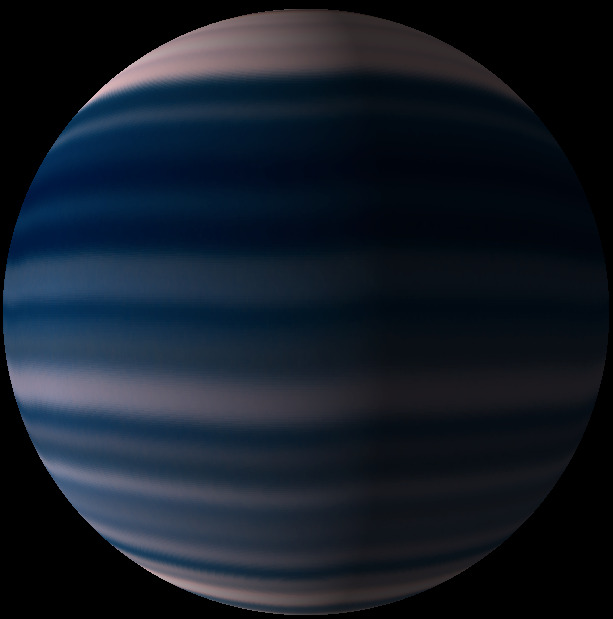
Imaginary Picture of WASP-103 b

Imaginary picture of WASP-103 b (Image credit: Miu Shimizu)

For more information about WASP-103 b, please visit the following link:
http://www.exoplanetkyoto.org/exohtml/WASP-103_bJP.html

TOI-1278 b

TOI-1278 b is an exoplanet orbiting the star TOI-1278, located 246.1 light-years (parsecs) from the Solar System, and was announced in 2021.
The star TOI-1278 has an apparent magnitude of 13.5 and an absolute magnitude of 9.1.
This star has 0.6 times the mass of the Sun, a radius of 0.6 times that of the Sun, a surface temperature of 3,799 K, and a spectral type of MOV.
In this star’s planetary system, TOI-1278 b orbits the star TOI-1278 with an orbital period of 14.5 days and a semi-major axis of 0.10 astronomical units (14,211,797.7 km).

TOI-1278b was announced in 2021. It is a gas giant orbiting the M-type star TOI-1278, located in the constellation Cygnus, approximately 246.1 light-years (75.5 parsecs) from the Solar System. It has a mass 18.5 times that of Jupiter and a radius 1.09 times that of Jupiter. It takes 14.5 days to complete one orbit around its star and is located at a distance of 0.095 astronomical units from it. Such a close proximity to the star is characteristic among known M-dwarf systems.

The “TOI” in a star’s name stands for “Tess Objects of Interest” and refers to a catalog of celestial objects for which the TESS exoplanet-hunting satellite has indicated the potential presence of planets. Celestial objects listed in the TOI catalog undergo follow-up observations using methods other than the transit method, such as Doppler spectroscopy and direct imaging. (文責:小川)

References:
Artigau et al. 2021., TOI–1278 B: SPIRou Unveils a Rare Brown Dwarf Companion in Close-in Orbit around an M Dwarf, The Astronomical Journal 162 144
https://exoplanets.nasa.gov/exoplanet-catalog/

For more information about TOI-1278 b, please visit the Exokyoto database page below.
TOI-1278 b (exoplanetkyoto.org)